
Many people with lip blush they no longer want assume laser removal is off the table. Maybe they've heard the story: someone goes in to have their lips lightened and comes out with a dark ring that won't budge. That fear isn't unfounded. But it also isn't the whole picture.
Lip blush removal is one of the shorter permanent makeup removal courses. Most cases clear in 2 to 3 sessions, spaced at least 8 weeks apart. What makes it more involved than standard tattoo removal isn't the session count. It's the pigment chemistry, and a specific risk called oxidation that every client needs to understand before booking.
How lip blush removal works
The process follows the same physics as any laser tattoo removal. The PicoWay laser delivers concentrated energy into the pigment. The pigment absorbs it, breaks into smaller particles, and the body clears those particles through the lymphatic system over time.
What's different with lip blush is what's in the pigment. Red pigment on its own clears relatively easily. Red mixed with white is a different situation, and most lip blush formulas contain white.
The oxidation risk
White-containing pigment is what creates the warm, natural-looking colour that most lip blush clients are after. It's also the source of the main risk in laser removal.
When white pigment absorbs laser energy, it can oxidize. Oxidation is a colour shift: the pigment darkens rather than lightening. This can happen immediately after treatment, or it can show up days later. And in some cases, it doesn't reverse.
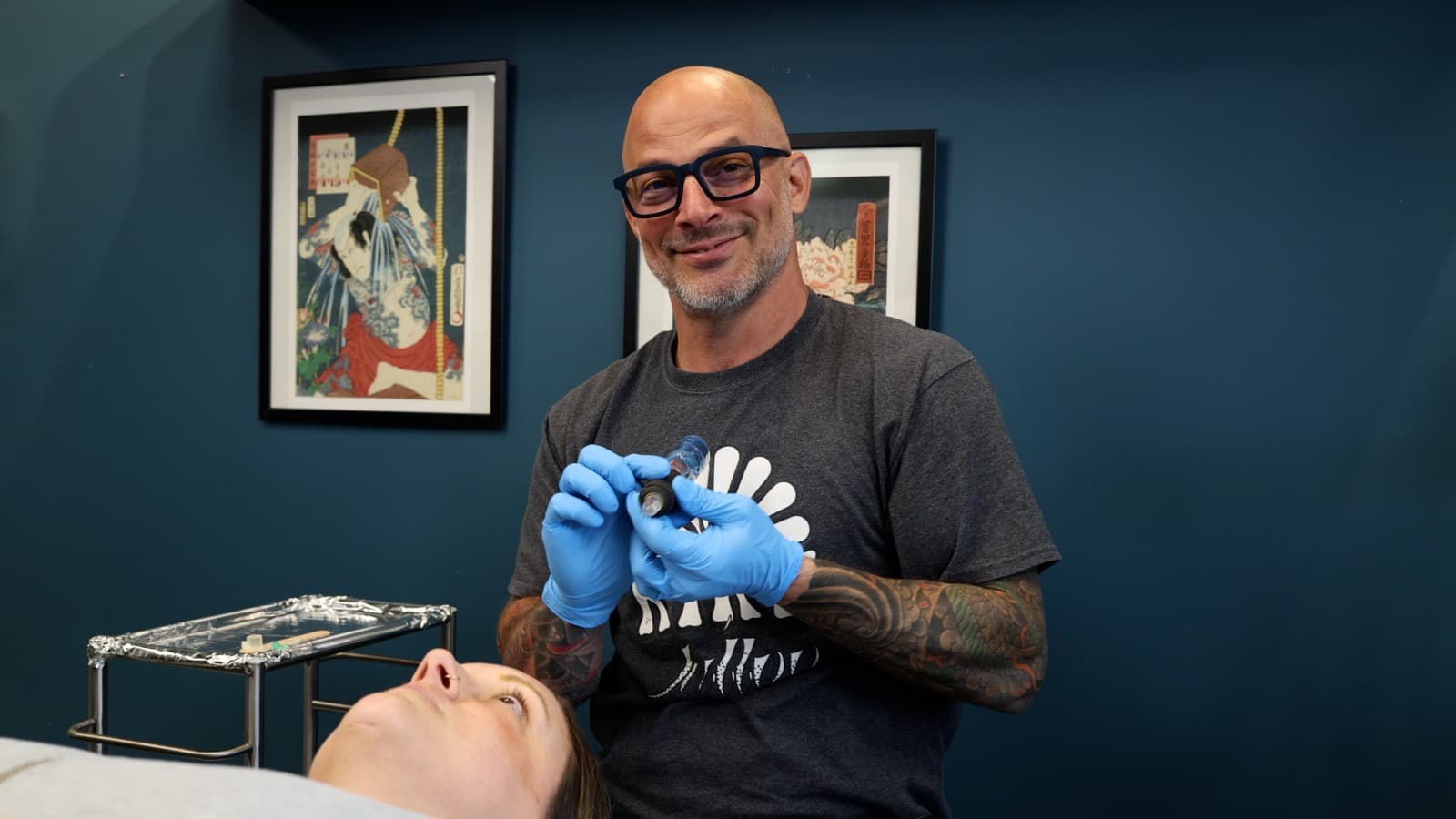
Billy DeCola, Studio Kiku's founder, explains it plainly: "White, when it's hit by the laser, has a tendency of darkening and oxidizing, and in some cases it will lighten up after a little bit of time, and in other cases it will not."
That's the risk clients need to understand before treatment begins. If the pigment oxidizes and stops responding to laser, the remaining option is saline removal, which is also not guaranteed to clear everything. Studio Kiku has that conversation at the consultation because a surprise mid-treatment is the worst possible outcome.
Why the studio always does a test spot first
Studio Kiku doesn't skip the test spot on lips. This is standard at the studio and it isn't optional.
The test spot tells the team how the pigment responds before committing to a full pass. If the pigment fades right away, the technician can continue with the full treatment in the same appointment. If it doesn't, the client is asked to return at least 48 to 72 hours later so the team can evaluate the response before proceeding.
There's an important caveat here. Billy is direct about it with every client: "Just because you do a test spot in one area of a tattoo, even if it's an eyebrow or a lip, that doesn't mean that the whole lip was tattooed consistently that way."
Permanent makeup is applied freehand. One area of the lip may have received more sessions, more saturation, or a different pigment batch than another area. The test spot gives the team useful information, but it isn't a guarantee of how the entire lip will respond. Studio Kiku tells clients this upfront.
What to expect during and after your session
Treatment is quick. Lips can be more sensitive than a body tattoo site, but the team runs the Zimmer cooling device throughout the session to manage discomfort, and breaks are always available.
After your appointment, expect some swelling. This is a normal tissue response and resolves on its own. The team will apply aftercare cream before you leave and provide written instructions.
For the first two days, apply a cold compress and keep your lips cool. Use cool water when washing, and avoid hot drinks. Starting on day three, apply Mad Rabbit Soothing Gel, Aquaphor, or a gentle moisturizer two to three times daily for one week. For two weeks, avoid sun exposure on the treatment area and any acidic skincare products.
The full PMU removal aftercare guide covers all of this. If anything feels outside what the team described at your appointment, contact the studio.
Where laser alone falls short
Laser alone doesn't always complete the job. If your pigment contains a significant amount of white, or if oxidation occurs and the darkened pigment doesn't respond to further sessions, the result may be a changed colour rather than a cleared one.
This is the conversation Studio Kiku has at every lip blush consultation. The team laid out all the possible outcomes with Yani Sordo, a permanent makeup artist from Langley who came to the studio to remove her own lip blush, and she described that consultation on The Faded Podcast. Her two laser sessions lifted most of the dark pigment, but the remaining yellow undertone required a different approach. That's the kind of case-by-case reality Studio Kiku wants every client to understand.
Some clients hear the risks and decide the potential for improvement outweighs them. Some decide to wait. Both are reasonable choices, and neither requires a pressure-filled consultation to arrive at.
If you've already had lip blush treated elsewhere and weren't happy with the result, or if your lips have developed an unexpected colour shift after previous laser treatment, please talk to the team in person before attempting anything else.
What to know before you book
If you've had a PMU session in the last 12 weeks, the team will ask you to wait before starting removal. The tissue needs time to settle before treatment. Studio Kiku will also review your full intake and skin history at the consultation, including the number of PMU sessions you've had, when the most recent one was, and what you know about the pigment formula used.
If you're ready to explore your options, you're welcome to book a free consultation at the Vancouver, Langley, or Vaughan studio. The assessment happens face to face: pigment undertone, previous work, and your goals all shape the plan, and you leave knowing what's achievable before anything is booked. Learn more about what the lip blush removal service looks like at Studio Kiku.
Thanks for reading.