
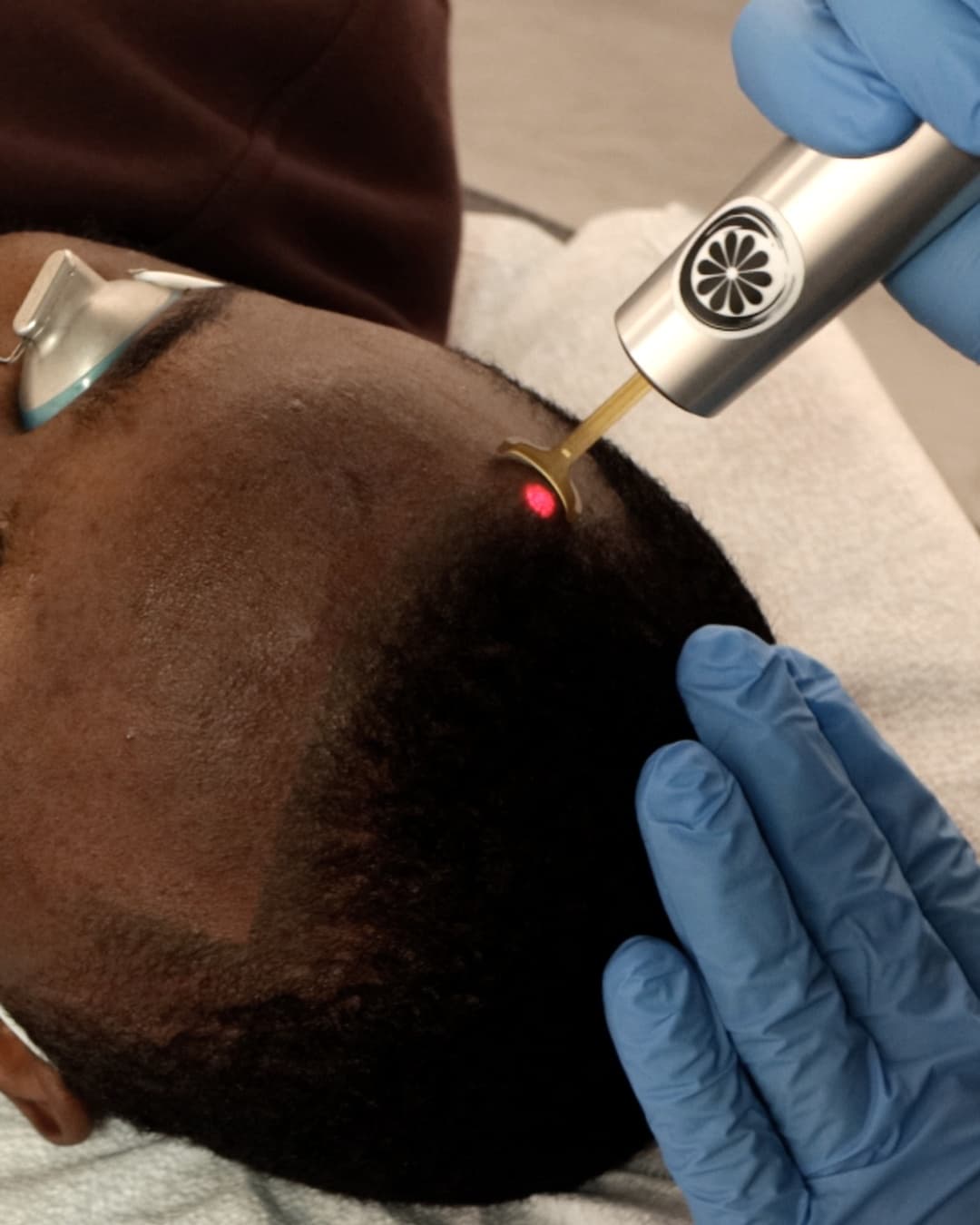
Scalp micropigmentation is meant to restore confidence. A well-done SMP job simulates the look of a close-shaved head or adds the impression of density to thinning hair, and it can be genuinely life-changing when the work is good. But when the pigment is too deep, the hairline is off, or the dots have turned into muddy splotches, the result can feel worse than going without. Studio Kiku sees this regularly. Clients come in looking to correct, lighten, or fully remove SMP that didn't land the way they hoped.
Laser SMP removal is a real solution for most of these situations. Knowing how it works, what affects the number of sessions you'll need, and where the limits are will help you set realistic expectations before you book.
Why people seek SMP removal
The reasons clients come to Studio Kiku for SMP removal fall into a few common categories.
Oversaturation is one of the most frequent. When a practitioner applies too much pigment or goes back over areas too soon, the result is a heavy, blotchy appearance rather than the natural stippled look of short hair. Depth is another common issue. Pigment placed too deeply spreads over time and the individual dots lose their definition, leaving a blurred or smeared look on the scalp.
Hairline problems bring in a significant share of the studio's SMP removal clients. Sometimes the shape was drawn incorrectly from the start. Sometimes it looks fine at first and then the pigment migrates slightly as it heals. In some cases, the whole design can be left in place and the team only works on the front few centimetres to reshape and soften the line. In others, the whole scalp needs lightening so the work can start fresh.
Some clients simply want to move on. SMP suited them at one point, and now they'd rather return to a natural look. That's a completely valid reason to remove it.
How the laser removal process works
Laser SMP removal follows the same clinical process as any laser tattoo removal. The laser delivers concentrated energy that targets the pigment in the scalp and fragments it into smaller particles. Your body's lymphatic system then clears those particles gradually over the weeks that follow.
Studio Kiku uses the Candela PicoWay. The PicoWay delivers ultra-short pulses that shatter pigment efficiently while minimising impact to the surrounding tissue. It's effective across all skin tones, which matters particularly for SMP clients because the head and hairline area includes a range of complexions.
Sessions are spaced a minimum of 8 weeks apart to allow the body to clear the fragmented pigment before the team treats the area again.
How many sessions you'll need
Session count for SMP removal depends on the depth and saturation of the pigment. There's no flat number that applies to everyone.
Light, soft SMP that was placed shallowly and conservatively can fade dramatically in the first couple of sessions. That's the easy end of the range. On the other end, dark, heavily saturated pigment placed deep in the scalp is some of the most resistant pigment the team treats.
As Billy DeCola, Studio Kiku's founder, explains in The Faded Podcast episode on SMP removal: "If you have dark, deep pigment, it is not coming out in one session. There is no way. I've seen some people have eight sessions of laser and it still didn't come out all the way."
The light pigment from a given session tends to clear first. What's left after the first few treatments is usually the deepest, most saturated material. Studio Kiku adjusts its approach across sessions based on how the pigment is responding.
The pigment a laser cannot touch
Not all SMP pigment is removable with laser, and it's important to be clear about that before treatment starts.
White or flesh-toned pigment cannot be removed with laser. When some practitioners try to conceal mistakes with a flesh-toned pigment, they create a situation the laser actually worsens: white pigment oxidises when treated and can turn darker rather than lighter. If your SMP contains a white or concealing pigment, laser alone won't resolve it, and the consultation is where that gets established.
Some SMP formulations contain warmer undertones, such as red or orange, that practitioners add to warm up a grey pigment. When the top layer of darker pigment is removed, these colours can surface, following the same pattern as brow pigment removal. The laser lifts the dark layer first and leaves the underlying colour behind. Depending on what's there, additional targeted treatments may address it, or the options narrow.
The head is also more sensitive than most body areas, particularly around the ears. Some clients find SMP removal more uncomfortable than arm or leg tattoo removal. Studio Kiku has cold air, numbing cream, and ice available to manage this during the session.
Aftercare after SMP removal
After a session, the treated area needs to be kept clean and cool. Wash the area gently with mild soap and cool water, and use cold compresses on the first day to manage any swelling. Avoid direct sun on the scalp, intense exercise, heat environments such as saunas, and anything that raises your core temperature for the first couple of days.
Staying hydrated and sleeping well genuinely supports the clearance process. Your body clears the fragmented pigment through its lymphatic system, and that system works better when you're healthy and rested.
The studio's full aftercare instructions are covered at the laser SMP removal aftercare page and are provided to every client in writing at each visit.
What the process looks like in practice
Studio Kiku starts every SMP removal with a free consultation: depth and saturation get assessed, the probable session range gets talked through, and you'll know upfront what's likely to respond well and what might present limitations.
From there, you book treatments spaced at least 8 weeks apart and assess progress together as the work goes on. For clients who want to eventually redo their SMP with better work, the team can also discuss the timing of new work once clearance is achieved. You'll want to give the scalp a minimum of 3 to 6 months after the final laser session before any new SMP is applied.
You can learn more about the SMP removal service or read about the scalp micropigmentation service if you're trying to understand what good SMP looks like before making a decision.
If you're living with an SMP result that doesn't feel right, a consultation costs nothing and gives you clear answers about what's possible. Book a free consultation at the Vancouver, Langley, or Vaughan studios and the team will walk you through what they see and what they'd recommend.
Thanks for reading.