
The SMP might look fine from the back. The density blends well, the coverage reads naturally. But the hairline sits a few millimetres too far forward, or the edge is drawn so crisp it looks like a painted line rather than a natural outline. That's one of the more frustrating SMP situations: the problem isn't the whole job, just one part of it, and it's the part people see first.
Studio Kiku sees this regularly. Selective laser treatment lets the team target only the section that needs work: softening a harsh front edge, removing pigment from a misplaced corner, or fading the entire hairline down so it can be redrawn cleanly. You don't always need to remove everything to fix the part that's wrong.
Why hairlines are the most common SMP complaint
The hairline is where the eye goes first and where mistakes are most visible. When SMP is applied for density or coverage, the back and crown have room to absorb small inconsistencies. The hairline doesn't.
Common problems Studio Kiku sees: a line drawn too low or too far forward; a shape that's too geometric and doesn't follow the client's natural growth pattern; a front edge that healed sharper than expected and now reads as artificial; or pigment that migrated slightly during healing and shifted the whole line.
Sometimes the problem comes down to depth. Pigment placed shallowly along the hairline can spread over time, blurring the individual dots and muddying the line. What looked clean at first now reads as a smudge rather than a natural transition.
What partial SMP laser removal looks like
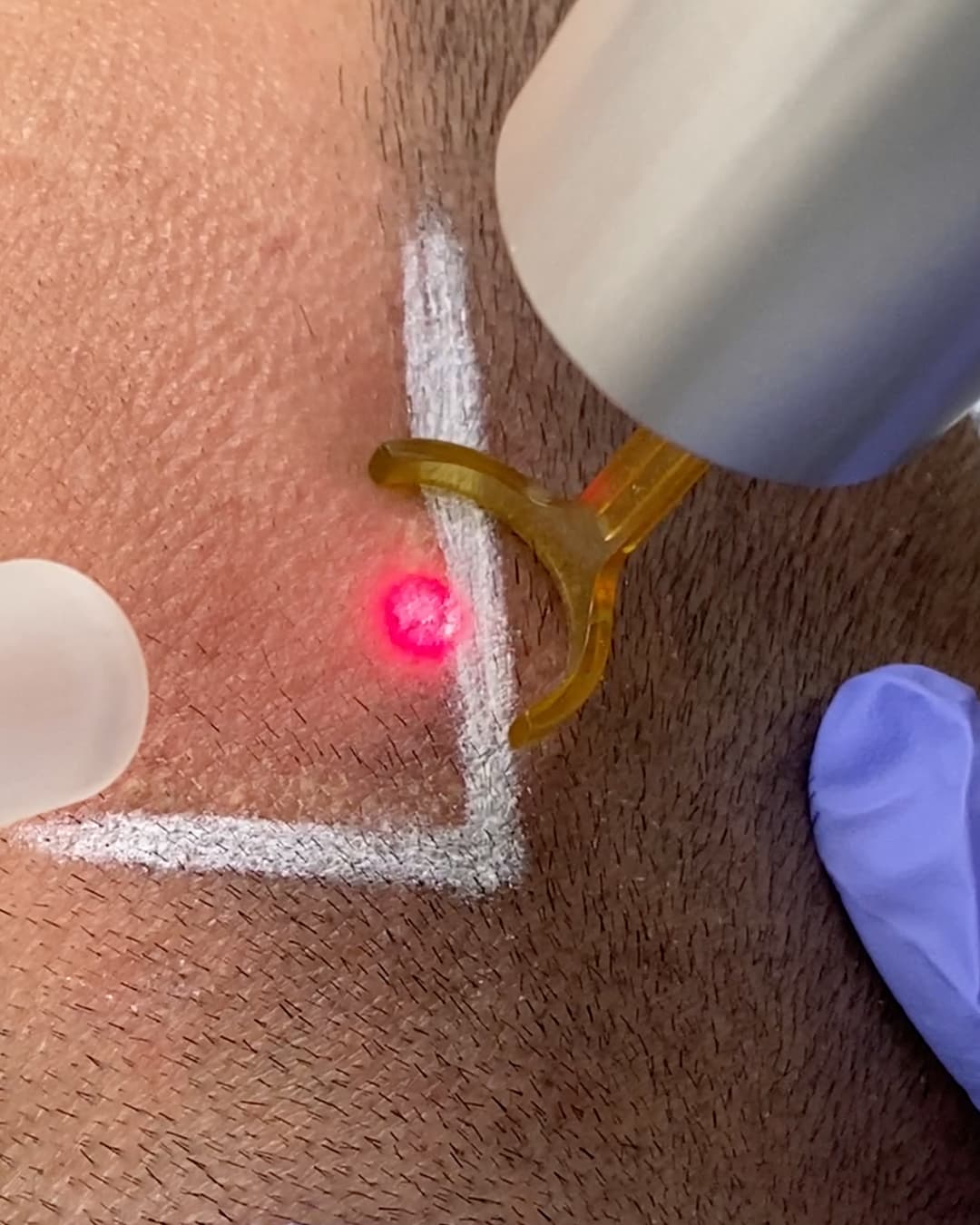
When only the hairline needs attention, Studio Kiku treats only the hairline. The technician draws a guide line on the scalp to mark the treatment zone, then works the PicoWay along that boundary.
The PicoWay delivers concentrated picosecond pulses that shatter pigment into microscopic particles. The body's lymphatic system clears those particles over the weeks that follow. Because the energy is targeted, the surrounding area that looks good can be left untouched.
As Billy DeCola, Studio Kiku's founder, explains in The Faded Podcast: "sometimes we only remove the front part and the back is fine. And then we'll just redo the hairline."
This partial correction approach is also used to fade a hairline down enough to make a repair possible. When an SMP artist needs to redo the front edge with better work, the existing pigment needs to be light enough for the new work to sit cleanly on top. Full clearance isn't always the goal; lightening is.
The three main options when a hairline is off
Refine the edge. If the hairline shape is close to right but the line is too harsh or sits slightly off, targeted sessions can soften the edge and create a more gradual transition. The goal isn't full removal but a result that reads as natural.
Fade and redo. When the hairline shape needs more significant adjustment, the team fades the front section down over several sessions, then brings in an SMP artist to redraw the line correctly. This is the most common scenario for clients who are otherwise satisfied with their SMP.
Full removal. When the entire job needs to come out, the team treats the whole scalp from front to back. The SMP removal service page covers what full removal looks like and what to expect across the session process.
What affects how well hairline pigment clears
Depth and saturation drive the result more than anything else. A hairline drawn with light, shallowly placed pigment can fade dramatically in the first two or three sessions. Deeper, more saturated pigment takes longer and clears more gradually.
The type of pigment matters too. Some SMP artists add warm undertones to their pigment mix to prevent it from healing grey. When the laser clears the dark layer, those warm pigments can surface. The result looks similar to what happens during brow removal: the dark lifts first, leaving a red or orange cast behind. It's addressable in most cases, but it can mean the correction takes more sessions than the hairline alone would suggest.
Sessions are spaced a minimum of 8 weeks apart to let the skin heal and to give the body time to clear fragmented pigment before the next treatment.
The corrections that stay partial
Not every hairline problem can be fully corrected. Pigment placed very deep, or applied heavily across multiple sessions, may lighten significantly but not fully clear. If a practitioner used a flesh-toned or white pigment to conceal early hairline mistakes, laser won't resolve it. White pigment doesn't clear with laser: it oxidises and can darken rather than fade.
Billy DeCola is straightforward about this: "If you have dark, deep pigment, it is not coming out in one session. There is no way. I've seen some people have eight sessions of laser and it still didn't come out all the way."
The studio's job at a consultation is to assess what pigment is there, how deep it sits, and what a correction can genuinely reach. Sometimes the answer is two or three sessions and a clean correction. Sometimes it's a longer process, and knowing that upfront is better than finding out mid-treatment.
For clients who eventually want to redo the scalp micropigmentation with better work, the team can talk through timing once the lightening or clearance goal is achieved. As a general guideline, the scalp needs a minimum of 3 to 6 months after the final laser session before new SMP is applied.
What happens at a consultation
Consultations at Studio Kiku are free. Pigment depth and saturation get assessed on the spot, and you leave with a session estimate for the correction, not a maybe.
If you're living with an SMP hairline that doesn't feel right, book a free consultation at the Vancouver, Langley, or Vaughan studios. The team will tell you what they see and what they'd recommend.
Thanks for reading.