
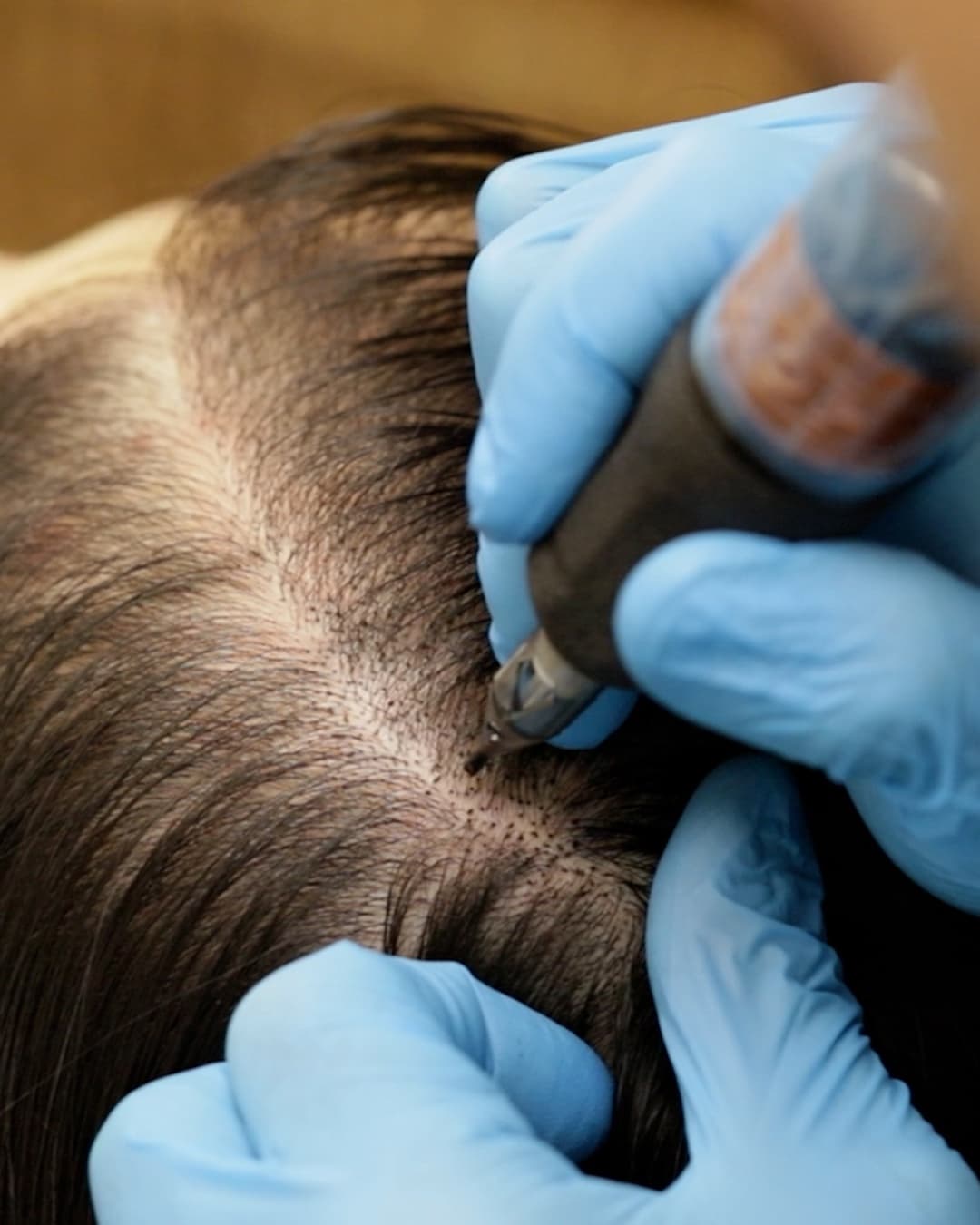
Women experiencing hair thinning face a different challenge than men with pattern baldness. Most conversations about scalp micropigmentation focus on the shaved-head look, but that's only one way the treatment gets used. SMP for density takes a different approach, and for many women with diffuse or crown thinning, it's an option worth understanding properly.
The treatment doesn't grow hair back or slow hair loss. What it does is place pigment dots between existing hair follicles, reducing the visible contrast between the scalp and hair and making coverage look fuller than it actually is.
What SMP for density does
When hair thins, the scalp becomes visible through the remaining strands. That contrast between scalp and hair is what registers as thinning to anyone looking at it. Scalp micropigmentation addresses this by placing tiny pigment dots at scalp level, blending with existing hair and softening the overall appearance.
The result isn't dramatic. SMP for density isn't a transformation - it's a refinement. The goal is that the hair looks the way it used to, or close to it, without anyone identifying what changed. When it's done well, people notice the hair looks fuller without registering that anything was done.
"SMP is a cosmetic tattoo that can either add the illusion of stubble to somebody's head...or it can add the illusion of density to somebody with thinning hair," says Billy DeCola, Studio Kiku founder.
Why technique matters more for density work
Density SMP is technically more demanding than full-scalp coverage work. When a client keeps their hair at normal length, the pigment dots need to integrate with existing hair rather than be the entire picture. The dot size, shade, and placement all have to account for the hair around them. The match to the client's existing hair colour and scalp undertone determines whether the result looks natural or artificial.
A practitioner trained primarily in male full-scalp coverage won't necessarily have the technical foundation for density work. Too much pigment, dots placed too close together, or a shade that doesn't match the existing hair will produce a muddy or unnatural result.
Billy DeCola has been performing scalp micropigmentation since 2015 and has trained practitioners across Canada in the density technique. Studio Kiku offers scalp micropigmentation for density work at the Vancouver and Langley studios, with Billy performing the work directly at each.
Who is a good candidate
SMP for density suits clients dealing with:
- Diffuse thinning across the crown or top of the scalp
- Visible scalp at the part or hairline
- Androgenetic alopecia (female pattern hair loss)
- Other types of alopecia where the scalp has become noticeably exposed
- Scar tissue from transplants or other procedures that disrupts the appearance of coverage
The consultation is where Studio Kiku assesses whether SMP is actually the right fit. The team looks at the degree of thinning, the hair colour and existing density, the scalp's skin tone, and what result is realistic for that client's situation. If SMP isn't a good match, the team will say so directly.
What the process looks like
SMP typically takes two to three sessions spaced approximately four to six weeks apart. The first session establishes the base coverage and placement, building initial density through the thinning areas. The second builds on that foundation and refines coverage. A third session is sometimes needed to address areas that healed lighter or require blending.
Sessions run one to three hours depending on the treatment area. Most clients describe the sensation as tolerable. The pigment dots settle and soften over the first week following each session, and the full result is visible after the final session heals. Unlike some hair-loss approaches, there's no waiting period for the coverage to develop - it's immediate.
SMP does not stop hair loss
SMP for density does not stop or slow hair loss. If you're still actively thinning, the coverage can look mismatched over time as the hair around the pigment continues to thin. Studio Kiku often recommends waiting until hair loss has stabilised before committing to a specific density level or hairline position. If the thinning continues, additional sessions can address changes as they develop.
The pigment also fades over time. Depending on sun exposure, skin type, and how the body clears pigment, the result typically needs a touch-up session after several years to maintain its original appearance. This is a maintenance commitment, not a one-time investment.
SMP also won't produce a natural result for every client. Very light hair colours - blonde or grey - present a specific challenge because available pigment shades may not blend well with the existing hair. Shade matching gets tested at the consultation, and if it isn't going to work, you'll know before any treatment starts.
How to book
Consultations at Studio Kiku are free and happen in person. The team looks at your scalp in person, assesses the degree of thinning and skin tone, and gives you a clear picture of what's achievable before any commitment is made. Book a free consultation at the Vancouver or Langley studio and the team will walk you through your options.
Thanks for reading.