
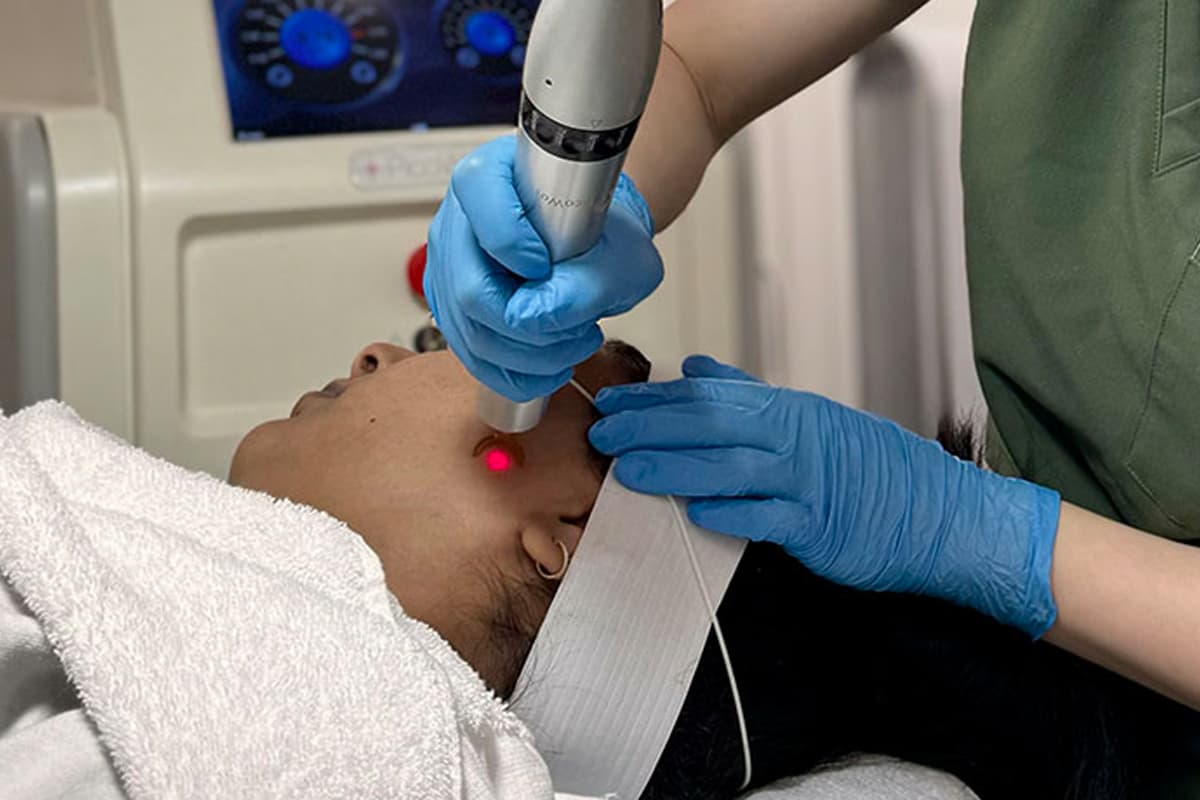
Skincare routines can brighten the surface, but they rarely reach what's sitting deeper in the skin. If you've been managing sun spots, post-acne discolouration, or a persistent unevenness in skin tone for months or years with limited results, a topical-only approach probably isn't the right tool for what you're dealing with.
PicoToning is a non-ablative laser treatment that targets pigmentation at the source. It doesn't resurface the skin or create open wounds. It delivers ultra-short pulses of energy that break down unwanted pigment, and your body clears the fragments over time.
What PicoToning can treat
PicoToning is most effective on pigmentation that sits in or just below the upper layers of the skin:
- Sun damage and sun spots
- Age spots and café au lait spots
- Acne-related discolouration and post-inflammatory hyperpigmentation
- Freckles, when the goal is lightening
- Melasma
- General uneven skin tone
If you're looking at a dark spot that appeared after a breakout, or sun spots that have accumulated over years of UV exposure, PicoToning addresses the underlying pigment rather than buffing the surface.
How the treatment works
PicoToning uses the Candela PicoWay, the same platform the studio uses for tattoo removal, calibrated specifically for skin pigmentation. A picosecond is one trillionth of a second. At that pulse duration, the laser shatters pigment particles without spending enough time on the skin to generate significant heat in the surrounding tissue. This is what keeps the treatment safe and effective across a range of skin types.
As Billy DeCola, Studio Kiku founder, explains: "It is the safest on all skin tones. So it's safe to use on darker skin tones."
For skin pigmentation, the laser targets melanin in the problem areas without disrupting the baseline tone of the surrounding skin. Sessions are quick, typically under 30 minutes, and most clients describe the sensation as mild. The studio also uses the Zimmer Cryo 6 cooling system during treatment to keep the skin comfortable.
What to expect from a series of sessions
PicoToning is not a single-session fix. Most clients see noticeable improvement over 3 to 6 sessions, with some change often visible after the second or third appointment. Sessions are spaced about one month apart to give the body time to clear the fragmented pigment between visits.
Downtime is minimal. You can expect mild redness or some itchiness in the treated area for 24 to 48 hours after each session. Sun protection is non-negotiable: a medical-grade SPF 30 or higher applied daily is part of the aftercare, and the studio asks clients to avoid direct sun for 7 days after each session. The team also recommends holding off on makeup for 7 days and avoiding active exfoliants, retinoids, and vitamin C for 5 to 7 days.
The improvement is gradual. Pigmentation that has built up over years won't disappear after one session, and the skin takes time to process the changes between appointments.
Where PicoToning reaches its limits
PicoToning works well on diffuse, surface-level pigmentation, but it has real limits. Melasma in particular can be stubborn, and results depend on the cause of the pigmentation, your skin type, and how deeply the pigment sits. What you'll get at the consultation is a specific read on your pigmentation, not a blanket promise.
The treatment isn't appropriate in all situations. Active skin infections, open lesions, or recent sunburn are reasons to wait. If you've been on isotretinoin in the past 6 months, you'll need to hold off before booking. Results also aren't permanent: most clients who want sustained outcomes find that occasional maintenance sessions are part of the plan.
PicoToning also isn't a substitute for addressing the underlying causes of your pigmentation. Sun protection habits, hormonal factors, and post-acne behaviour all affect how well results hold over time. Expect this to come up at your consultation.
Is PicoToning right for you?
If you've been frustrated by sun spots, persistent acne marks, or a generally uneven skin tone that topical products haven't resolved, PicoToning is worth a conversation. It's also commonly combined with the studio's Rejuvenation treatment, which targets skin texture and collagen, when clients want to address both pigmentation and skin quality at the same time. You can learn more about both services on the laser facials page.
Skin reads differently in person than in a mirror, so start with an assessment. Book a free consultation at the Vancouver, Langley, or Vaughan studio, and you'll hear what PicoToning can do for your particular pigmentation and what a treatment plan would look like.
Thanks for reading.