
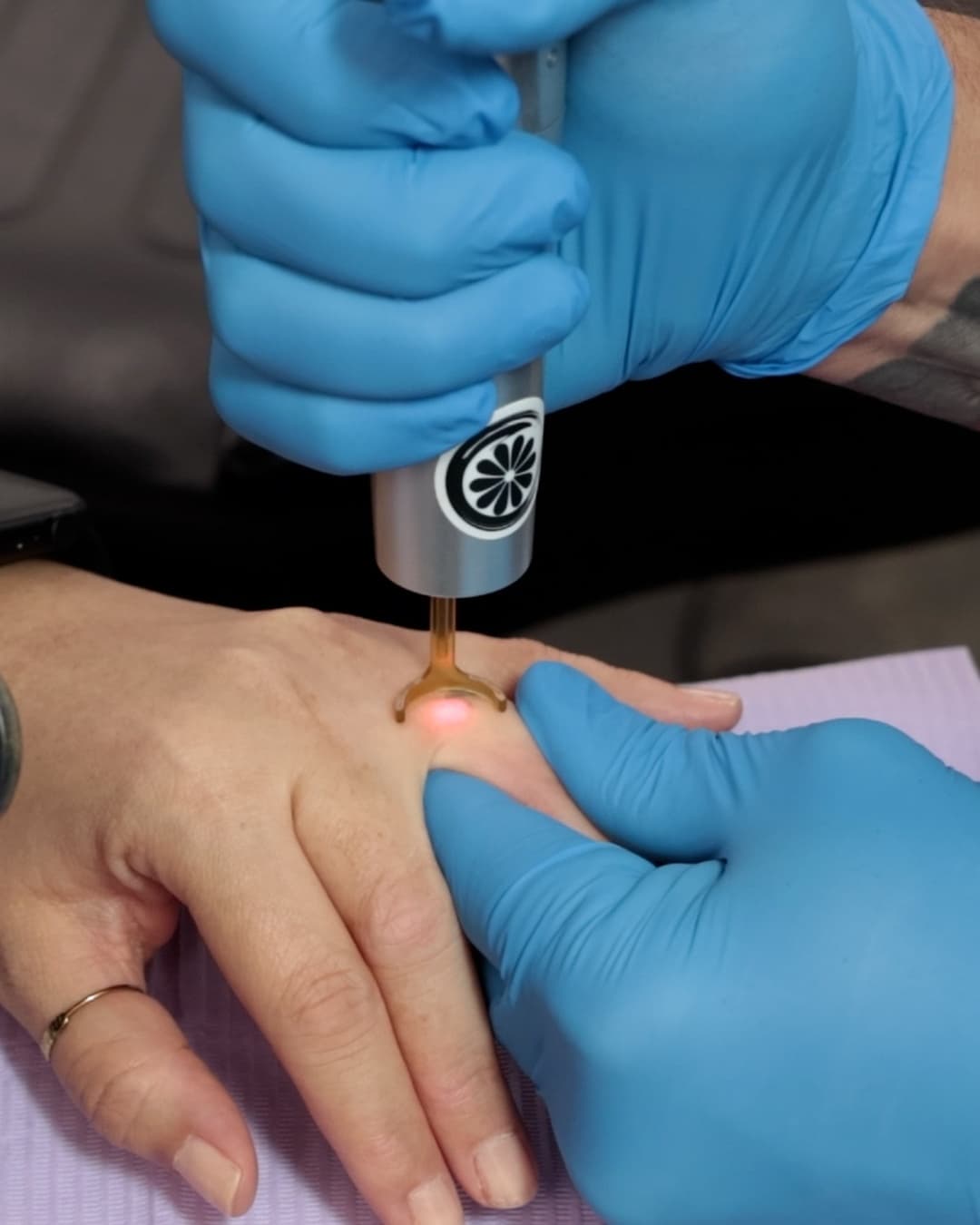
Summer is the season when most people pause their tattoo removal plans. The concern makes sense: sun exposure is bad for the skin around laser sessions, and summer is full of it. But the concern is often bigger than the actual risk, and pausing for three to four months every year puts a serious dent in any removal timeline.
The short answer is that most people can continue laser tattoo removal through the summer with some straightforward precautions. Understanding what the sun actually does to the skin around the time of a session makes those precautions much easier to follow.
Why sun exposure matters around a laser session
The laser targets pigment in the skin. When the surrounding skin is tanned or sun-damaged, the contrast between the pigment and the skin tone is reduced, which limits how aggressively the technician can treat the area. Darker, recently tanned skin absorbs more laser energy, raising the risk of blistering, hyperpigmentation, or hypopigmentation.
This is why the pre-care instructions for laser tattoo removal include keeping the treatment area out of the sun for two weeks before each session. It's not about avoiding the sun entirely. It's about keeping the specific treatment area protected so the technician can work as safely and effectively as possible.
After a session, the skin needs the same protection. A freshly treated area is more vulnerable to UV damage, and sun on a freshly treated site can disrupt recovery and affect results. Studio Kiku recommends keeping the treated area out of direct sun for at least two weeks.
How to protect the treatment area without staying indoors
The good news is that "sun avoidance" doesn't mean skipping the entire summer. Billy DeCola, Studio Kiku's founder, explains it plainly in The Faded Podcast episode on preparing for tattoo removal: "That doesn't mean that you have to avoid the sun completely. It just means that the treatment area should be kept out of the sun. A lot of people use band-aids or KT tape, or just clothing to protect their skin from the sun."
If the tattoo is on your arm, a long-sleeve rash guard or UV-protective sleeve works well at the beach. A bandage or KT tape over a smaller area is another practical option. For a tattoo on a foot or ankle, a light sock does the job. The goal is local, targeted protection, not a summer-long hiatus from outdoor life.
Arriving at your session with the treatment area as un-tanned as possible makes a real difference. The less pigmentation in the surrounding skin, the more effectively and safely the team can treat the area.
What changes in summer: pre-care and aftercare
The rules themselves don't change in summer; they just take more planning to follow consistently. Two weeks before a session, the treatment area needs to stay out of the sun. Self-tanner should be avoided completely, since any product that darkens the skin creates the same challenge as an actual tan. Active skincare ingredients such as retinol and AHAs should be stopped at least 10 days before treatment.
After a session, the area needs protection from the sun, which typically means a few weeks of careful coverage. Staying cool also matters. High temperatures, intense exercise, saunas, and hot tubs can all increase the risk of side effects, and in summer that's easy to overlook.
The full pre-care and post-care protocols are available on the laser tattoo removal aftercare page and are provided to every client in writing at each visit.
When rescheduling is the smarter move
There are situations where it makes sense to reschedule a session rather than push through. If you're leaving for a beach trip in the two weeks after your next scheduled appointment, it's better to move the session to after you're back. If you've had significant sun exposure on the treatment area recently and haven't been covering it, tell the technician at your appointment. The team will assess the skin and decide whether to proceed, adjust the settings, or wait.
For clients whose tattoo is in a covered area such as the torso, thigh, or upper arm, summer sessions usually cause no disruption at all. For clients with tattoos on the hands, forearms, neck, or feet, more active management is required. Either way, the conversation starts at the consultation.
Why starting now still makes sense
Every session completed is a session of clearance that begins. The body keeps breaking down fragmented pigment for weeks after each treatment, so the work continues between visits. Pausing for the whole summer means losing four to five months of that clearance window.
If you start now and commit to protecting the treatment area between sessions, you'll be meaningfully further along by the time next summer arrives. The team at Studio Kiku will work with your schedule and help you plan sessions at times when you can follow the aftercare properly.
If you're not sure whether summer is the right time to start or to continue, ask. Book a free consultation at the Vancouver, Langley, or Vaughan studio, bring your travel plans, and the schedule gets built around them.
Thanks for reading.