
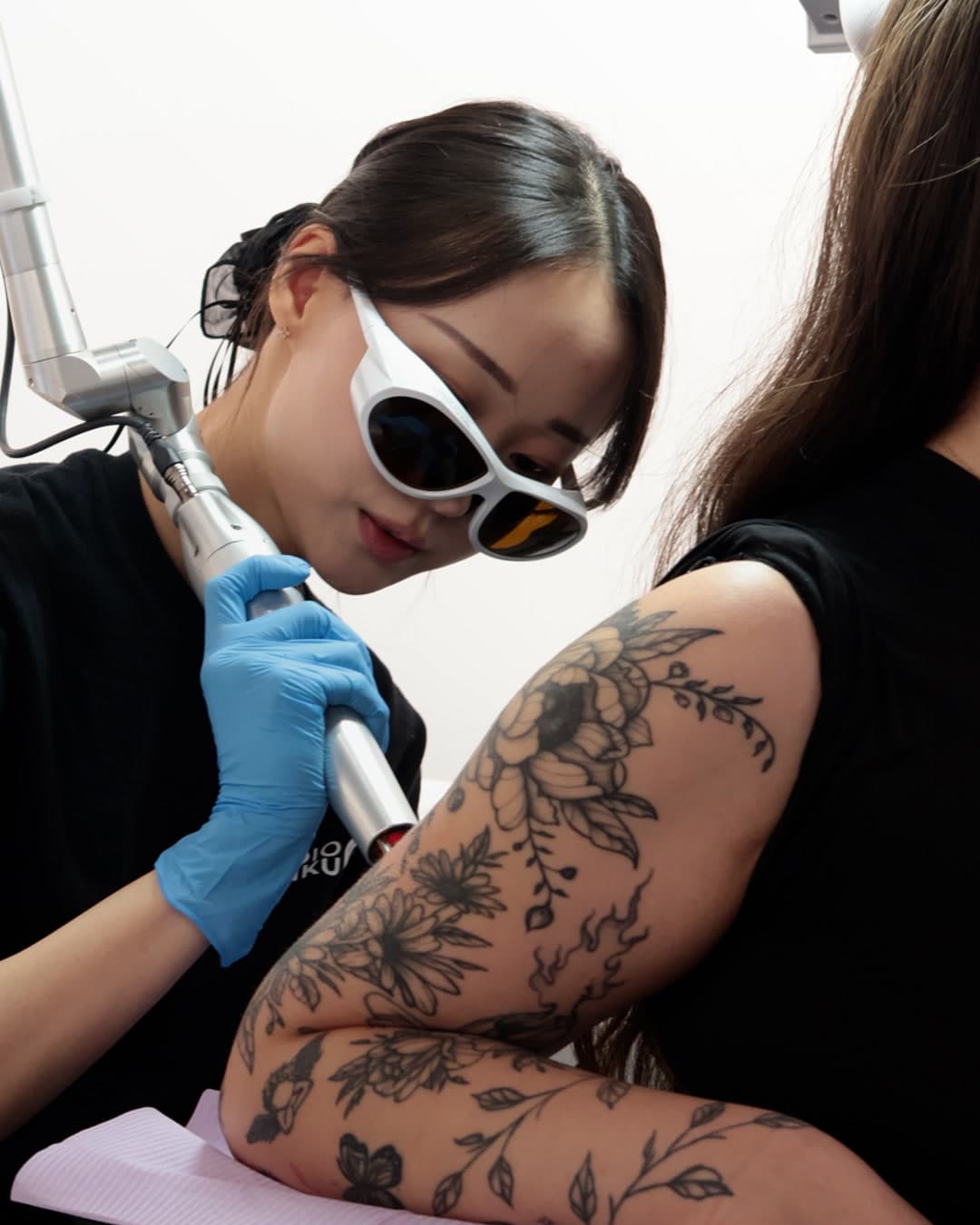
A lot of people come to Studio Kiku not to remove a tattoo completely, but to make room for new work. Maybe the old piece has run its course. Maybe the design never worked the way you hoped. Whatever the reason, fading a tattoo with laser before a cover-up is one of the most common reasons people book with Studio Kiku, and it is a different process from full removal.
The goal here is not to make the tattoo disappear. The goal is to get it light enough that a new piece can sit on top without the old one showing through. How light it needs to go depends almost entirely on what you plan to put over it.
How many sessions does fading take
For most tattoos, three to six sessions is enough to achieve the kind of fading a cover-up artist needs to work with. That is a meaningful difference from the nine to twelve sessions typically required for complete removal on a heavily saturated tattoo.
The timing still matters, though. Sessions are spaced a minimum of 8 weeks apart because the body does the clearing work in the weeks after each treatment, not during the session itself. Three sessions spread over six months is a realistic minimum timeline to plan for before you are ready to sit for new work.
Your cover-up design is the variable that changes everything
This is where a lot of people get stuck. They want a session count before they have figured out what they are putting over the old tattoo. Without knowing the new design, it is impossible to give a reliable estimate.
Billy DeCola, Studio Kiku founder, explains the difference clearly: "Suppose you're covering that up with a panther head, like a black panther head... you barely have to lighten that tattoo at all in order to cover it up. But suppose you're getting some fine line flower, that's all negative space and just some line work done... you're gonna have to get that peach a lot lighter than you would if you're gonna cover it up with the panther."
A bold, heavily shaded design can sit over far more residual pigment than fine line or negative-space work can. The coverage demands of the new piece determine how far the old one has to fade.
Stay in communication with your cover-up artist
The most useful thing you can do throughout the fading process is keep your cover-up artist in the loop. Show them the area at each stage and ask directly whether what they see is light enough for the design you have planned.
As Billy puts it: "I always recommend communicating with your artist. Figure out what design you're gonna get and check in with your artist. Ask 'em or ask her, how light do I need this? Is it ready? Or should I go back and get more sessions?"
That back-and-forth is the clearest way to avoid stopping too early or going further than you need to. Your artist has the best read on whether the remaining pigment is workable for the piece they have in mind. The studio covers more on reading fading progress in The Faded Podcast episode on the most frequently asked questions about laser tattoo removal.
What happens between your last laser session and the new tattoo
Once your cover-up artist confirms the area is ready, you will still need to wait before sitting for new work. Studio Kiku recommends waiting a minimum of three to six months after the final laser session before tattooing over the area. Timelines vary from person to person, so the specific timing is worth discussing with both your laser studio and your tattoo artist before booking.
It is also worth mentioning your laser history to your artist when you book. The skin does change slightly through the removal process, and knowing that context helps your artist plan accordingly.
Where fading gets unpredictable
Cover-up fading is straightforward in concept but genuinely case-by-case in practice. Some tattoos fade predictably and evenly. Others have inconsistent saturation across the piece, scar tissue from the original session, or pigment colours (particularly yellows and whites) that resist the laser. Heavily saturated pieces and tattoos that are already cover-ups may take more sessions than the three to six session estimate suggests.
The Complete Tattoo Removal Package is not offered for cover-up tattoos. Cover-ups involve layers of pigment at different depths, which makes the removal process less predictable than a single original piece. Single-session pricing applies instead.
If you are unsure how your tattoo is likely to respond, that is exactly what a consultation settles. Nobody can grade saturation or scar tissue from a photo; in person it takes minutes.
Start with a free consultation
If a cover-up is the plan, bring your artist's ideas to a free laser tattoo removal consultation. Studio Kiku will assess the existing tattoo, estimate how many fading sessions the new design needs, and coordinate the timeline so the skin is ready when your artist is. Book a free consultation in Vancouver, Langley, or Vaughan.
Thanks for reading.