
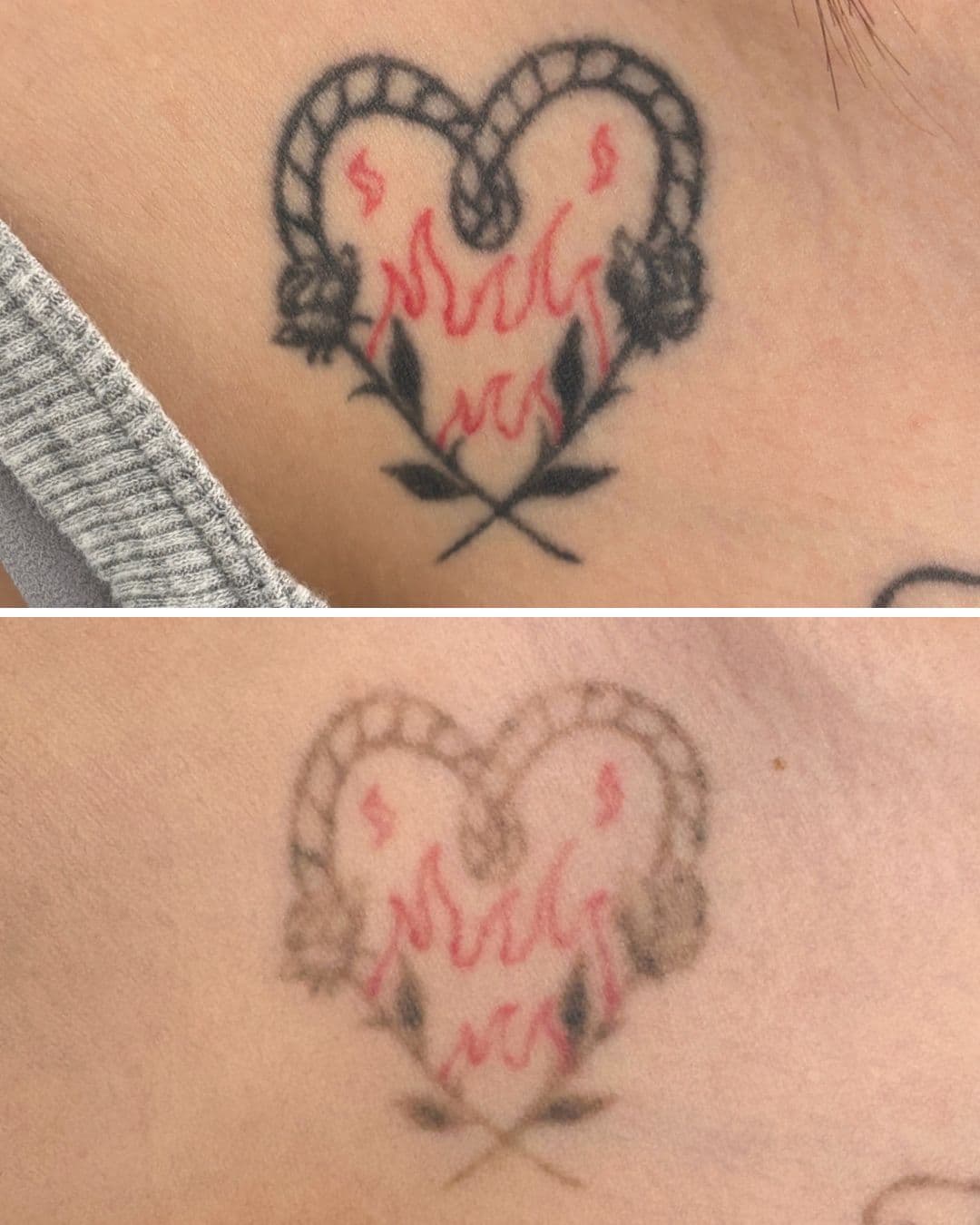
Most people expect fading to start right after the first session. For some tattoos it does - a lightly saturated outline can look noticeably lighter after two or three passes. But a newer, heavily saturated piece can still look strong after six sessions, even with consistent treatment on a good picosecond laser. That is not a failure of the laser. It reflects how the removal process actually works, and what a densely pigmented body tattoo requires from your body over time.
The laser's job is fast. A full pass takes minutes. The work that follows - clearing the shattered pigment particles that remain in the dermis - happens over the weeks between sessions. Your lymphatic system carries that debris out, and it has no pump of its own. The lymph moves only when the body moves, stays hydrated, and contracts its muscles. What you do between sessions has a real effect on how well each treatment translates to visible fading. The laser tattoo removal aftercare guide covers the immediate post-session steps; this post focuses on the habits that sustain the process across the weeks that follow.
How the lymphatic system fits in
When the PicoWay breaks down tattoo pigment, the fragments do not disappear immediately. They stay in the dermis until the lymphatic system absorbs and removes them gradually. "The laser is really fast with breaking down the pigment," says Billy DeCola, Studio Kiku founder. "But it takes your body quite a bit of time to pick up those particles."
The circulatory system has the heart to keep blood moving. The lymphatic system has no equivalent pump. It relies on hydration, muscle contraction, and physical movement to flow. Your daily habits between sessions directly affect how quickly the body can clear shattered pigment, which is why the standard advice - drink water, sleep, move - is not generic wellness talk. It maps directly onto how tattoo removal actually works at a physiological level. Studio Kiku covered this in depth in an episode of The Faded Podcast on lymphatic drainage and tattoo removal.
Drink more water than you think you need
Hydration is the most consistent recommendation Studio Kiku gives between sessions, and the one most clients underestimate. Water keeps lymph fluid moving, which supports the body's ability to process and eliminate the pigment fragments released after each treatment. Dehydration slows everything down.
"The way that you can help the process is by staying hydrated, eating healthy, getting good sleep, and just exercising, moving your body," says Billy DeCola. The simplicity of that advice is the point. The habits that keep the body working well in general are the same ones that support faster fading.
Two litres of water per day is a reasonable baseline for most people. It is a small change with a disproportionate effect on how efficiently the lymphatic system clears pigment particles.
Sleep and nutrition
Sleep is when the body repairs tissue, runs immune responses, and processes metabolic waste. Consistently getting fewer than seven or eight hours does not just cause fatigue - it slows down every recovery process, including the clearing of fragmented pigment after a session.
Nutrition works alongside sleep. There is no specific food that accelerates tattoo removal, but a diet that keeps your immune system functioning well supports the process. Clients who are run down, eating poorly, or carrying chronic stress tend to see slower fading between visits. Staying well-fed and rested is one of the few things a client directly controls across the months of a removal plan.
Movement gets the lymph going
The lymphatic system depends on muscle contraction and physical activity to circulate. Walking, gym sessions, swimming - even 20 minutes of movement a day has a measurable effect on lymphatic flow. Some clients also find dry brushing and rebounding (using a small trampoline) useful between sessions, as both are associated with stimulating lymphatic circulation.
There is no need to restructure an entire fitness routine around tattoo removal. Consistent moderate movement is more useful than intense bursts followed by several days of inactivity. The goal is simply to avoid being sedentary in the weeks between appointments.
Water and sleep won't shrink the session count
Lifestyle habits help the body do its job. They do not change what the laser is working with. A heavily saturated, deeply applied tattoo - like the one in the photo here - still needs the number of sessions it needs. Drinking two litres of water a day will not reduce a ten-session tattoo to three.
What good habits do is help ensure that each session's results actually translate into visible fading rather than stalling in the body. The fundamentals - pigment volume, depth, colour, and body placement - set the floor on how many sessions to expect. Your habits between sessions influence how cleanly the body converts each treatment into progress.
A tattoo in a high-flow area such as the torso or upper arm will also clear faster than the same tattoo on fingers or feet, where circulation is naturally lower. That is not something lifestyle changes can fully compensate for, and the team at Studio Kiku will tell you as much during a consultation.
Your own tattoo's timeline is a consultation question, not a search result. Book a free consultation at Studio Kiku in Vancouver, Langley, or Vaughan, and the team will assess the pigment, talk through session ranges for your piece, and show you where the habits above genuinely help.
Thanks for reading.