
Most people researching laser tattoo removal compare studios on price and location. Those aren't bad starting points, but they're not the factors that determine how well your tattoo fades. Studio Kiku is asked regularly, by both clients and other practitioners, what separates a studio that produces consistent results from one that doesn't. The answer comes down to three things: the laser, the technician's training, and how honest the studio is about what's realistic for your specific tattoo.
Understanding those three factors before you book can save significant time, money, and frustration.
The laser is the starting point, not the whole story
The word "picosecond" appears in the marketing for nearly every modern laser tattoo removal studio, but not all picosecond lasers perform the same way. Pulse duration, which is how quickly the laser energy contacts the pigment, varies dramatically between brands. A faster pulse shatters pigment more efficiently and deposits less heat into the surrounding skin. A slower pulse carries more thermal exposure, increases the risk of side effects, and typically requires more sessions to achieve comparable fading.
"If you're thinking about tattoo removal, then make sure you ask the right questions about the equipment that the studio you're going to is gonna use," says Billy DeCola, Studio Kiku founder.
Studio Kiku uses the Candela PicoWay, which has a pulse duration of 300 to 450 picoseconds, the fastest in the picosecond category. It is also the device recognised as the safest across all skin tones. If a studio cannot tell you the model and pulse duration of its laser, that is a meaningful data point. The Faded Podcast episode on picosecond lasers breaks down exactly how the major brands compare and explains why pulse duration is the right question to ask.
The technician's training matters as much as the equipment
A laser is a tool. The technician's judgment and experience are what determine whether it gets used well.
Effective laser tattoo removal requires hands-on skill developed through real practice on real clients. Recognising how skin is responding to a treatment, adjusting settings based on what's visible, and knowing when to hold back are skills that develop through live, supervised sessions, not through a video course. A technician who trained on the actual device being used for your treatment is in a meaningfully different position from one who hasn't.
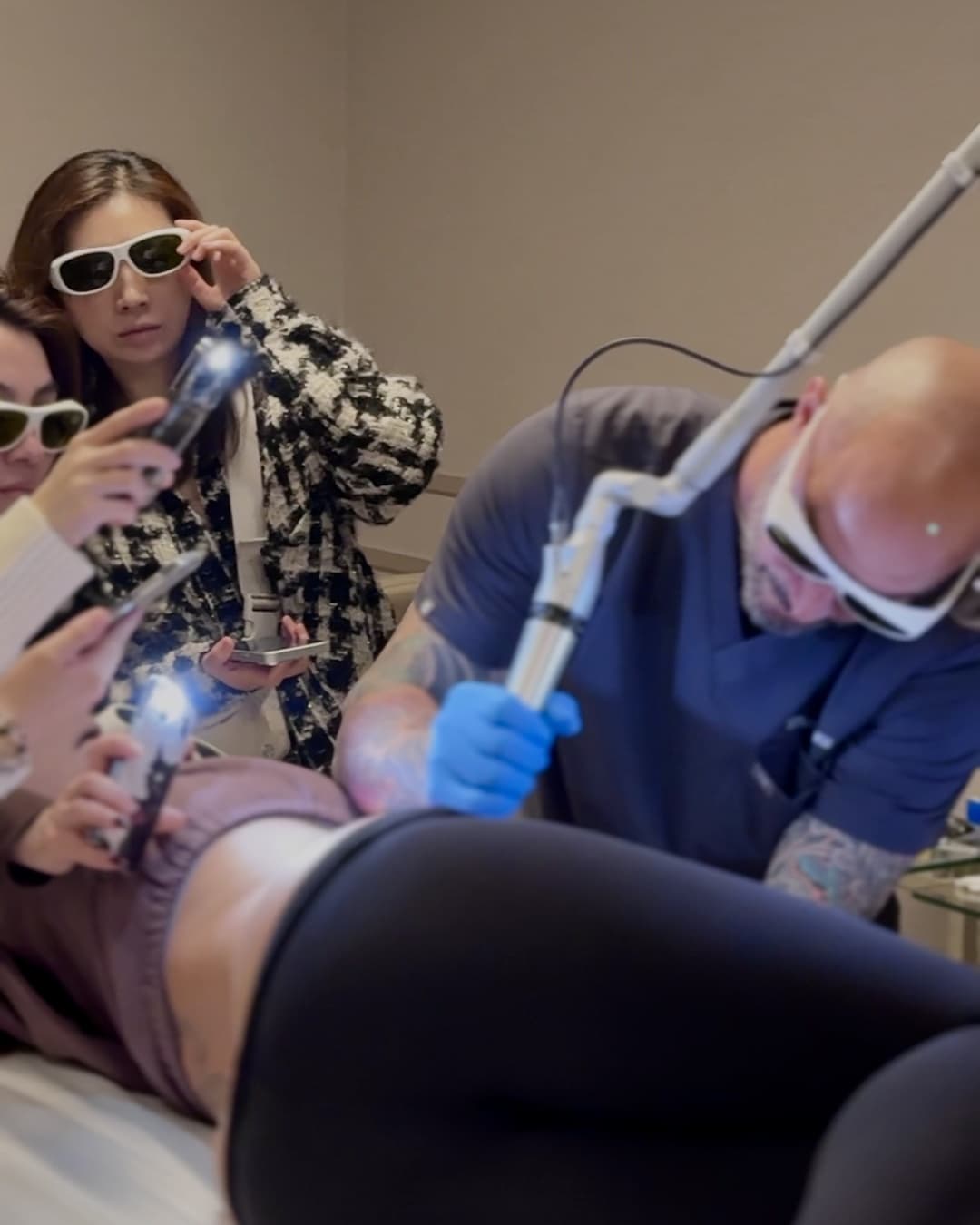
Studio Kiku runs laser tattoo removal certification training for practitioners across Canada, conducted in person on live models using the PicoWay. Billy DeCola leads the training alongside senior technicians Ailie Park and Jamie Peachey. Billy has been in the tattoo industry since 2009, including time on Miami Ink and TLC's NY Ink, and Studio Kiku holds a Candela Medical Key Opinion Leader designation for its excellence in laser results. That the studio trains other practitioners on the same equipment it uses for client care reflects the standard the team holds itself to.
When evaluating a studio, it is reasonable to ask about the technician's background, how many sessions they have completed, and whether they have trained on the specific device being used for your treatment. A studio confident in its team's credentials will answer those questions without hesitation.
What a real consultation covers
A consultation before your first session is not just a pricing appointment. A good one gives you enough information to make an informed decision, regardless of whether you book that day.
At Studio Kiku, consultations are free and happen in person. The team looks at the tattoo directly, assesses the pigment depth and saturation, reviews medical history, and estimates the session count from what they actually observe. The conversation covers what the process feels like, what to expect in the days after a session, and where the specific tattoo in front of them is likely to end up.
A studio that skips the in-person assessment, provides a session range without seeing the tattoo, or avoids discussing what might not fully clear is worth approaching carefully.
Questions worth asking before you book
A few straightforward questions will tell you a great deal about a studio before any commitment is made:
- What laser do you use, and what is its pulse duration?
- Who performs the treatments, and what is their training background?
- What does a realistic outcome look like for my tattoo specifically?
- What happens if the skin reacts unexpectedly during a session?
A studio that answers those questions clearly and without overpromising is one that takes your outcome seriously. One that deflects, goes straight to pricing, or promises complete clearance on every tattoo is worth a second look.
What credentials don't override
Credentials, training, and the right laser improve results, but they don't override the biology of tattoo removal. The laser fragments the pigment; the body's immune system is what clears it. Skin type, the pigment used in the original tattoo, the age and depth of the work, and overall health all affect how well a tattoo responds. No studio can change those variables.
Some tattoos, particularly those containing white or light pigments, heavily layered coverup work, or a history of prior removal attempts, are genuinely difficult to clear completely. A good studio tells you that before you begin, not after six sessions have passed.
What proper training and the right technology actually do is reduce the number of sessions required to get results, minimise side effects, and give you accurate information from the start. That is not a small thing. It is often the difference between a removal process that works as expected and one that doesn't.
Laser tattoo removal is worth approaching with the same care you'd bring to any significant decision about your skin. Choosing a studio that invests in the right equipment, proper technician training, and consultations that tell you the whole story is the most important step in the process.
If you'd like to know what laser tattoo removal looks like at Studio Kiku, the team is happy to look at your situation in person. Book a free consultation at the Vancouver, Langley, or Vaughan studios and put the checklist in this post to the test.
Thanks for reading.