
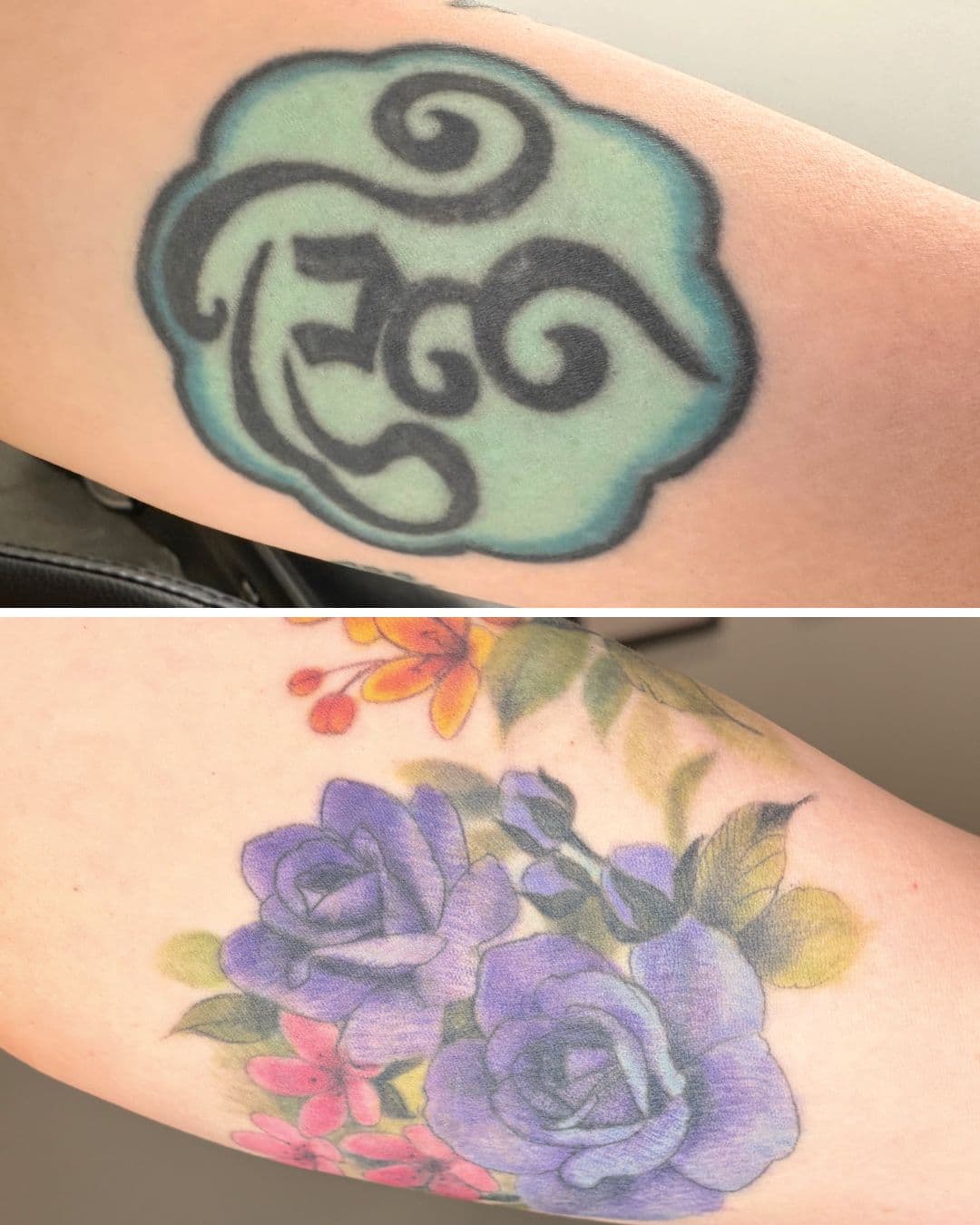
The photo above tells part of the story. The top frame shows the tattoo Studio Kiku treated: a teal and black abstract design on the forearm. The bottom frame shows what sits in the same spot now - a detailed floral coverup, purple roses over the old piece. Look closely at the skin in the after photo. There's no raised border where the laser worked. No lighter patch. No textural shift between the treated area and the skin beside it. That kind of result comes from treating the skin as carefully as the pigment underneath it.
Scarring from laser tattoo removal is a real risk. But it almost never happens because of the laser itself. It happens because of how a technician uses one.
Why aggressive treatment causes scar tissue
A laser delivers energy at the pigment particles embedded in the skin. When settings are calibrated correctly for the tattoo being treated, the energy shatters those pigment particles without depositing enough residual heat in the surrounding tissue to cause injury. When a technician pushes settings higher than the tattoo warrants - trying to show faster results in fewer sessions - the heat generated after fragmentation exceeds what the tissue can safely absorb.
Excess heat causes blistering. Blistered skin opens. Open wounds that are infected or disrupted close as scar tissue. That scar tissue then takes the shape of the tattoo that was treated - a permanent ghost image that, unlike pigment, doesn't respond to further laser sessions.
Billy DeCola, Studio Kiku founder, is direct about where this comes from: "I think part of it is that laser techs are trying to over-please the client. They're just gonna turn this thing up and really blast the pigment out so this person's happy. But what you end up doing is causing damage to the skin and you're done."
How Studio Kiku treats dark, saturated tattoos
The Studio Kiku approach to removal is deliberately graduated. Dark, saturated tattoos hold more pigment, which means more energy is released when that pigment fragments. More energy released means more heat in the surrounding tissue - not because settings are miscalibrated, but because volume amplifies the effect. Starting conservatively and building as the pigment thins keeps that heat within safe limits at every stage.
The result is a session count that may be one or two higher than an aggressive approach might produce. The outcome is skin that looks like the photo above: clean, intact, and ready for whatever the client has planned next - whether that's a coverup or nothing at all. Studio Kiku's goal isn't the fewest sessions. It's skin worth showing.
What proper session spacing protects
Sessions are spaced a minimum of 8 weeks apart, and that interval isn't arbitrary. After a laser session, the body is actively clearing shattered pigment particles through the lymphatic system - a process that continues for weeks after the treatment. The skin's inflammatory response is also still running its course.
Treating skin before that process finishes means the tissue from the previous session hasn't fully settled. Even settings that are individually safe can accumulate into overtreatment when applied to skin that is still recovering. The 8-week minimum is the floor; sessions targeting warm undertones with more aggressive wavelengths often benefit from a 12-week gap instead.
Pre-existing scar tissue from the original tattoo
Some tattoos arrive at the studio with scar tissue already present from the original tattooing process. This happens most often in pieces that were heavily reworked during application - spots where the artist went back over the same area multiple times, or where the skin was pushed harder than it could handle at the time.
That pre-existing tissue changes how removal goes in a specific way: it sits between the laser and the pigment underneath, acting as a physical barrier. The pigment is lodged below it or inside it, and circulation through scar tissue is poor, so clearing is slower even when fragmentation works. Studio Kiku has a technique to break down scar tissue so the pigment becomes accessible, but it adds sessions and changes the realistic timeline. Knowing this before treatment begins shapes both expectations and planning.
When texture still changes despite careful work
The graduated approach substantially reduces the risk of texture changes. It doesn't bring that risk to zero.
Very densely saturated tattoos - especially large, heavily worked pieces - generate more heat per session even at conservative settings, because there is simply more pigment to fragment at once. Clients whose skin arrives in a sensitised state from sun exposure, active illness, or previous aggressive treatment by another provider start from a different baseline than untreated skin does. And aftercare has a direct effect on outcomes: a session done carefully can still result in blistering if the client raises body temperature too soon after treatment, exposes the area to sun too soon, or picks at the skin during recovery.
Studio Kiku covers all of this before the first session. The complete post-treatment guidance is on the laser tattoo removal aftercare page, and the team reviews the key points at the consultation as well.
Starting with a clear picture
If you're considering laser tattoo removal and want to understand what your tattoo and skin actually need, a free consultation is where that assessment happens. Studio Kiku looks at the tattoo, checks for pre-existing factors like scar tissue or colour types that affect the approach, and explains what careful, precise removal looks like for your specific situation. Book a free consultation in Vancouver, Langley, or Vaughan.
Thanks for reading.