
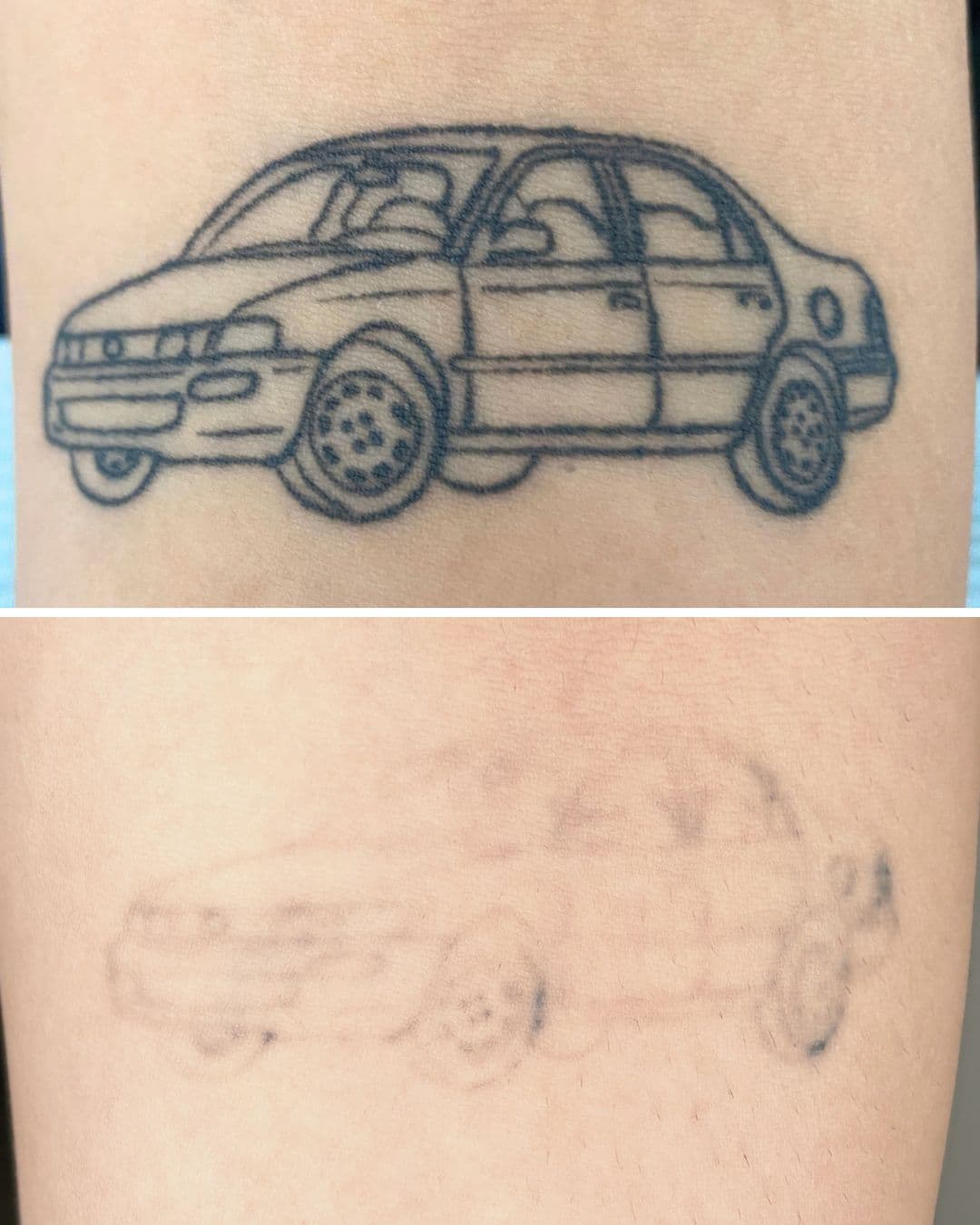
A tattoo seven sessions in can look deceptively persistent - faded significantly, ghostly where it was once crisp, but still visible. That stage feels discouraging to some clients. Studio Kiku reads it as the process working exactly as it should.
Dense, heavily saturated black tattoos are some of the most common cases the studio sees. They take more sessions than average, not because something is wrong, but because removing them safely is a gradual process by design.
Why the first sessions start gently
The laser delivers concentrated energy into the skin, shattering pigment into smaller particles. The body then clears those particles through the lymphatic system over the weeks that follow. What the laser cannot do - and should not try to do - is clear a dense tattoo in just a few aggressive sessions.
Billy DeCola, founder of Studio Kiku, explains the approach plainly: "When you see a very saturated, dark tattoo, it's important to go slowly from the beginning. If you laser it so aggressively, you're going to remove the pigment, but you're going to leave a scar in the same shape of the tattoo that you had."
The first sessions work at conservative settings, starting to break down the pigment and prompting the body to begin clearing. The settings adjust upward as the pigment fades and the density decreases - matching the laser to where the tattoo is in the process, not where the technician wants it to be.
Your body is doing most of the work
The laser is fast. The body is the slow part.
Sessions are spaced at least 8 weeks apart to respect that clearing process. The lymphatic system is busy between appointments, removing the shattered pigment particles from the previous session. Coming in early does not accelerate that - it means treating skin that has not finished processing the last visit.
How quickly the body clears also depends on overall health, activity level, and where the tattoo sits on the body. Areas with strong circulation - the torso and upper body - tend to see faster results than tattoos on the hands, feet, or fingers, where flow is lower. Clients who stay hydrated, sleep well, and stay active give their body the best conditions to keep clearing between sessions.
What the later sessions look like
Most of the visible pigment has broken down by session six or seven on a dense tattoo. What remains tends to sit in the areas that were most heavily saturated - the densest parts of the original design.
The tattoo often looks like a faint ghost at that point: the shape still readable in certain light, fragmented rather than solid. That is not a plateau. That is the body catching up to a large amount of cleared pigment, and a few more targeted sessions typically bring those remaining clusters to clearance.
Studio Kiku's Complete Removal Package covers the full course of sessions needed for a heavily saturated tattoo - from start to clear skin - at a flat rate, without counting individual visits.
The risk of prioritising speed over the skin
Aggressive settings can remove a dense tattoo in fewer sessions, but the trade-off is real: those settings can produce permanent scar tissue in the shape of the original design. The tattoo is gone, but what replaces it is visible in its own way.
Billy DeCola has seen this outcome enough times that it shapes how Studio Kiku approaches every dense removal case: "Yes, it may take you longer than the other place, but you will leave with clean, intact skin, and that's what we want to do."
Scarring from aggressive laser treatment is difficult to address. Studio Kiku's position is that the goal of removal is clean skin, not just cleared pigment - and those two outcomes are not the same when the settings are wrong.
Billy covers the full timeline in depth on The Faded Podcast.
Studio Kiku offers free consultations for anyone considering laser tattoo removal or wanting to understand what their tattoo's timeline looks like. The technician assesses the pigment density and saturation in person and gives you a session estimate based on what they actually see - not a number chosen to sound encouraging. Book a free consultation in Vancouver, Langley, or Vaughan.
Thanks for reading.