
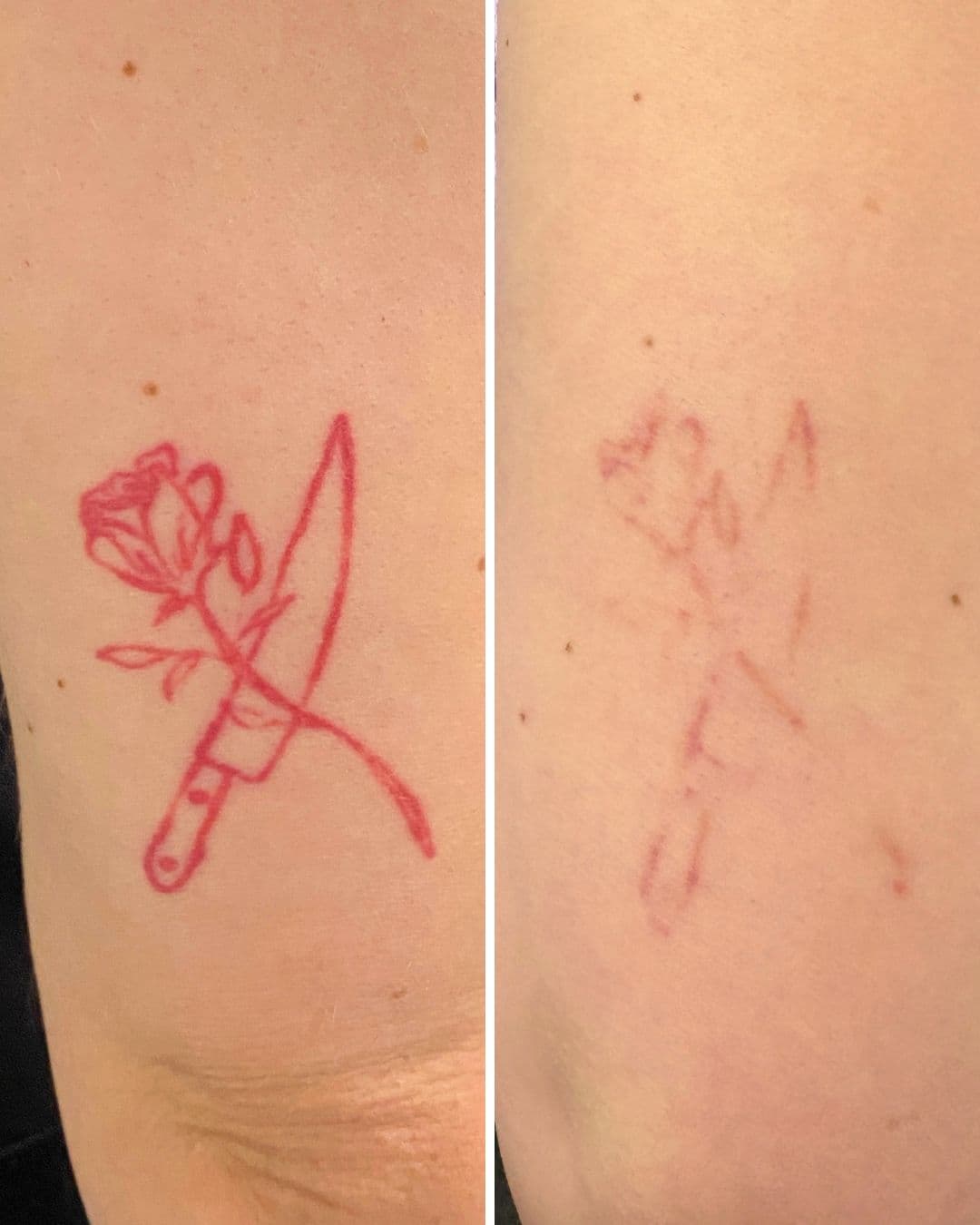
One of the questions that comes up before a first consultation is whether laser tattoo removal will affect the skin around the tattoo. Not the tattoo itself - the skin beside and below it. Will it be lighter? Darker? Visibly different from everything surrounding it?
The short answer is that it can be, under the wrong conditions. The longer answer is that those conditions are largely within the technician's control.
What hyperpigmentation and hypopigmentation are
Hyperpigmentation means the treated area darkens after a session. The skin's melanocytes respond to the trauma of the laser by producing extra melanin, leaving a darker patch behind. Hypopigmentation is the opposite: the melanocytes are disrupted enough that the area loses colour and appears lighter than the surrounding skin.
Both can be temporary. In more serious cases they are long-lasting. Both are far more commonly caused by overtreatment - by settings that are too aggressive, applied too early in the process - than by laser technology itself.
Why overtreatment leads to skin tone changes
The laser delivers precise pulses of energy at the pigment embedded in the skin. When the settings are right, those pulses shatter the pigment particles without generating enough residual heat to damage the surrounding tissue. When a technician pushes settings too high, or treats a heavily saturated tattoo as aggressively as they would a light outline piece, the heat left behind after the pigment fragments exceeds what the tissue can safely absorb.
That excess heat damages the cells responsible for skin tone. The body's inflammatory response kicks in, and depending on the client's skin type, the area either overproduces melanin or suppresses it. In the most serious cases, that response creates scar tissue that mirrors the shape of the original tattoo.
"Once that happens, your skin is scarred and there's no way to reverse that," says Billy DeCola, Studio Kiku founder. "Whether it's hyperpigmentation or hypopigmentation, that is definitely not what you want."
How Studio Kiku prevents it
Studio Kiku's approach is graduated: lighter treatment in the opening sessions, with settings that increase as the pigment thins out. This is especially important for dark, heavily saturated tattoos where a large volume of pigment sits under the skin. More pigment means more energy released when it fragments, and more potential heat generated in the tissue.
"When we see dark saturated tattoos, we'll treat it very lightly during the first few sessions," says Billy DeCola. "We're breaking up the pigment without causing damage to the skin. We're allowing the body to get started on processing the pigment. And once the pigment starts fading a little bit, that's when we turn the settings up."
The trade-off is a session count that may be one or two higher than an aggressive approach would produce. The outcome is skin that comes out of the process undamaged. As Billy puts it: "What we wanna do is brag about how beautiful the skin is after the process is done."
Pulse duration and why it matters
The laser itself plays a role here too. Picosecond lasers like the Candela PicoWay deliver energy in shorter pulses than older nanosecond devices. The shorter the pulse, the less residual heat transfers to the tissue surrounding the pigment - which directly reduces the risk of skin tone changes. Nanosecond lasers deliver energy over a longer window, which leaves more heat behind. They can still produce clean results, but they require more conservative settings to stay within the safe zone. More about what pulse duration means for your skin is on the PicoWay page.
When skin colour changes are still possible
Proper technique and the right equipment reduce the risk substantially - they don't eliminate it entirely. Certain cases carry a higher baseline risk:
- Darker skin tones. Natural melanin absorbs laser energy, so clients with more melanin need more conservative settings and precise wavelength selection. Studio Kiku treats all skin types, but the calibration differs and the process takes more care.
- Very saturated tattoos. Dense pigment means more energy released per pulse, even when settings are conservative. The accumulated heat from a heavily saturated piece is higher than from a light outline tattoo.
- Recent sun exposure. A tan - from the sun or a self-tanner - raises melanin levels in the treated area and increases how much laser energy the skin absorbs. Avoiding sun on the area for at least two weeks before a session is part of the standard pre-care for a reason.
- Previous overtreatment. If another studio has already treated the area with settings that caused blistering or open wounds, the scar tissue that formed changes how the skin responds. Skin marked by a poorly managed prior session is a different starting point than untreated skin.
None of these factors make laser tattoo removal impossible. They mean the approach needs to adjust, and the realistic expectations need to be established before the first session - not after.
What the consultation is actually for
The consultation is where the team looks at the tattoo, the skin tone, any previous treatment history, and the overall condition of the area. That assessment shapes the opening settings, the wavelength selection, and the spacing between sessions. It is not a formality before starting - it is the step that determines whether the process goes well.
If you want to know what laser tattoo removal will look like for your specific tattoo and skin type, book a free consultation at the Vancouver, Langley, or Vaughan studio. The team will look at the area, explain the approach, and tell you clearly what to expect.
Thanks for reading.