
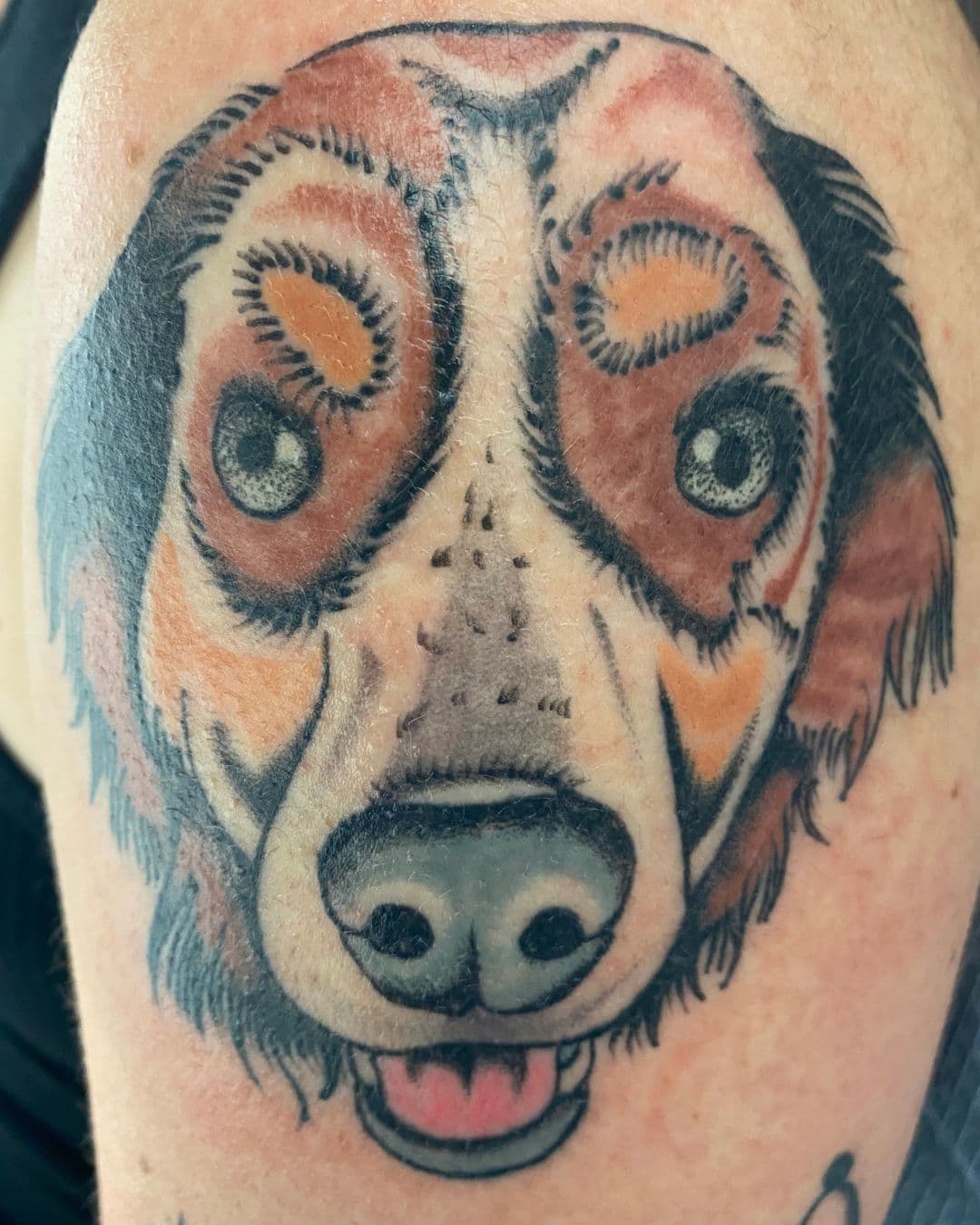
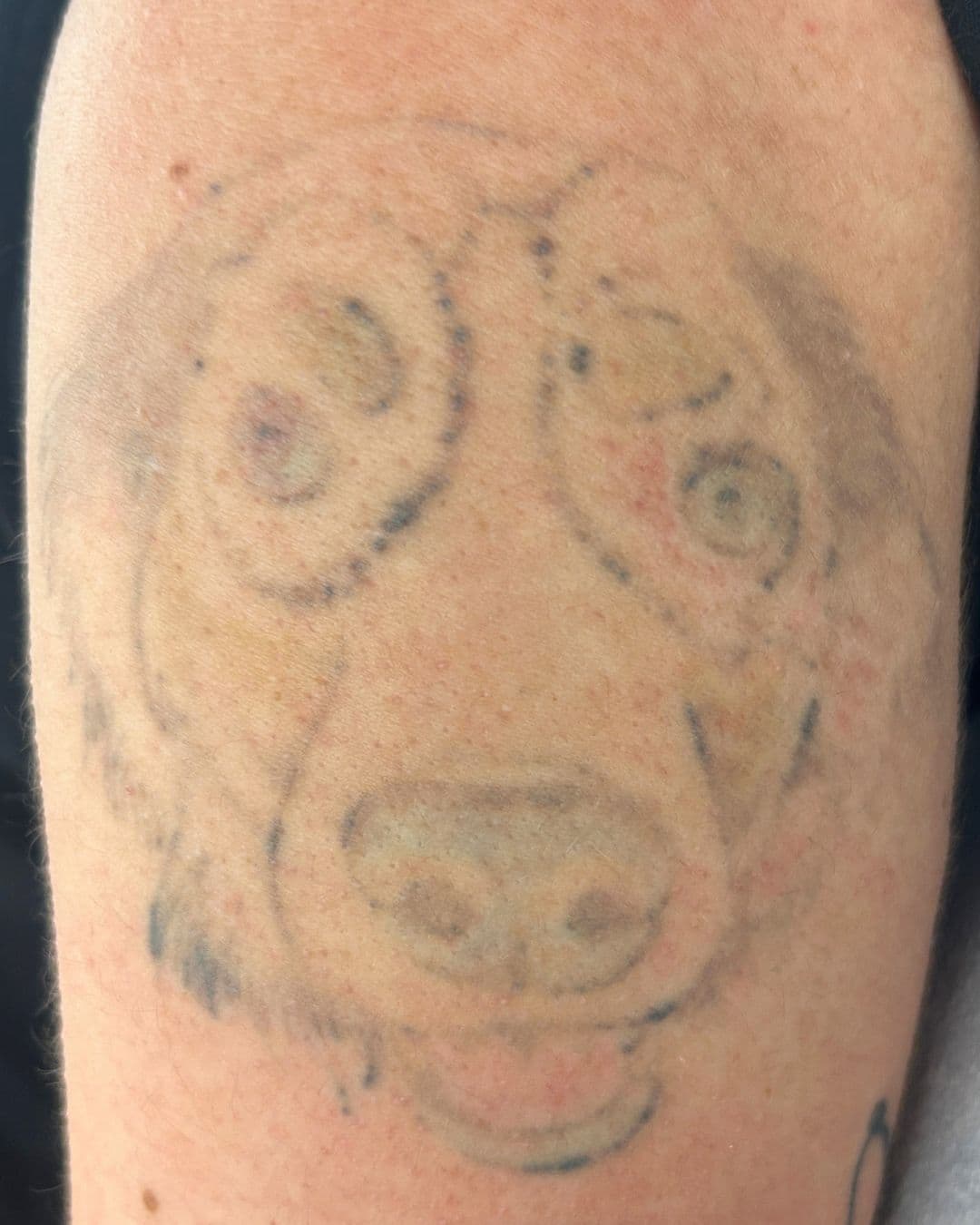
Portrait tattoos, animal faces, and elaborate colour pieces are among the most meaningful tattoos people carry. They're also some of the most complex to remove. If you have a heavily saturated, multi-colour tattoo and you're wondering how many sessions it will take, or what "progress" actually looks like, the short answer is: more than you might expect, and slower than a simple black design.
Progress is achievable, though. Studio Kiku regularly treats complex, multi-colour work at every location, and results develop session by session even on tattoos that initially seem like they'll never fade.
Why colour tattoos need more sessions
Black pigment is the most reliably removed colour because a single wavelength of laser energy targets it across all skin types. Colour tattoos are more complicated. Different pigment colours absorb different wavelengths, and thorough removal of a multi-colour tattoo requires the right wavelength matched to each colour in the piece.
Studio Kiku uses the Candela PicoWay, which operates across multiple wavelengths. As Billy DeCola, the studio's founder, explains: "We have the 1064 wavelength, which targets dark pigments, blacks, and anything that has black in it. We have the 730 and the 785, which targets greens and blues. And we have the 532, which targets all the sunset colours like reds, oranges, yellows. Sometimes even the 532 is not able to get out the yellow."
A portrait tattoo with black outlines, warm fur tones, and coloured eyes requires several of these wavelengths across different passes. That's what extends the process compared with a single-colour piece.
What 10 sessions on a tricky tattoo actually means
The typical range for complete laser tattoo removal at Studio Kiku is 9 to 12 sessions, spaced a minimum of 8 weeks apart. Complex, heavily saturated colour pieces often land at the top of that range, and some go further.
Ten sessions on a colourful portrait tattoo is not a sign that something is wrong. It's a sign that the body is doing the work it takes to clear dense, multi-pigment layers. After each session, the laser fragments the pigment into particles small enough for the body's lymphatic system to carry away. Clearing continues for weeks after the session ends, meaning the tattoo keeps fading between appointments even when it doesn't look that way at first.
What also matters at the 10-session mark is the condition of the skin. After that many sessions, the skin at a well-run studio should be healthy and undamaged. The PicoWay's picosecond pulses fragment pigment selectively, without the tissue damage associated with older, slower technology.
How the studio approaches multi-colour work
Before any session at Studio Kiku, the technician assesses which pigment colours are present and selects the appropriate wavelengths and settings. A portrait with black outlines, orange and brown tones, and blue or green eyes may require a different sequence of passes than a simple block-letter tattoo.
Session spacing of 8 weeks or more isn't arbitrary. It gives the body enough time to flush fragmented pigment before the next session adds more. Coming in more frequently doesn't speed things up. It stresses the skin without adding fading, and can actually increase the total session count in the long run.
The colours that resist the laser
Some pigment colours are genuinely difficult to clear fully with a laser, no matter how many sessions are completed. Yellow is the hardest. Even though the 532 nm wavelength targets the "sunset" range that includes reds, oranges, and yellows, yellow pigment often resists complete clearance. A tattoo with heavy yellow areas may fade significantly while leaving some residual colour behind.
White pigment presents a separate challenge. It can oxidise and darken when lasered, meaning the tattoo can look worse after a session if white is present and untested. Any tattoo with visible white, light baby blues, pinks, or certain opaque greys warrants a test spot before committing to full removal.
Mixed or "hybrid" pigments, where colours are blended rather than pure, can be difficult to match to a single wavelength. Billy DeCola puts it plainly: "It's always always important to have a consultation with your laser technician to make sure that they're able to remove the pigment that you have in your skin."
A free consultation at Studio Kiku covers exactly this: the technician identifies which pigment types are present and tells you what's achievable, colour by colour, before any treatment begins.
What healthy progress looks like
On a complex, multi-colour tattoo, progress doesn't always mean dramatic fading after every single session. It can look like softening at the edges, lightening of the black outlines, reduced saturation across the design, or a gradual blurring of the detail. Warm colours like red and orange often lift before yellows do.
At 10 sessions on a colourful portrait, the expectation is meaningful fading with a healthy, undamaged skin surface, not necessarily complete clearance. Steady progress without skin damage is what a safe, well-managed removal looks like over the long run. It takes longer than a simple black tattoo, but the trajectory is there.
For clients committed to full removal rather than fading, the Complete Removal Package at Studio Kiku covers up to 13 sessions at a single flat rate, with additional sessions available at a reduced rate if any visible pigment remains after that.
If you're weighing your options for a complex piece, book a free consultation at any Studio Kiku studio: Vancouver, Langley, or Vaughan. Ten minutes with the tattoo in front of a technician beats any amount of reading about it.
Thanks for reading.