
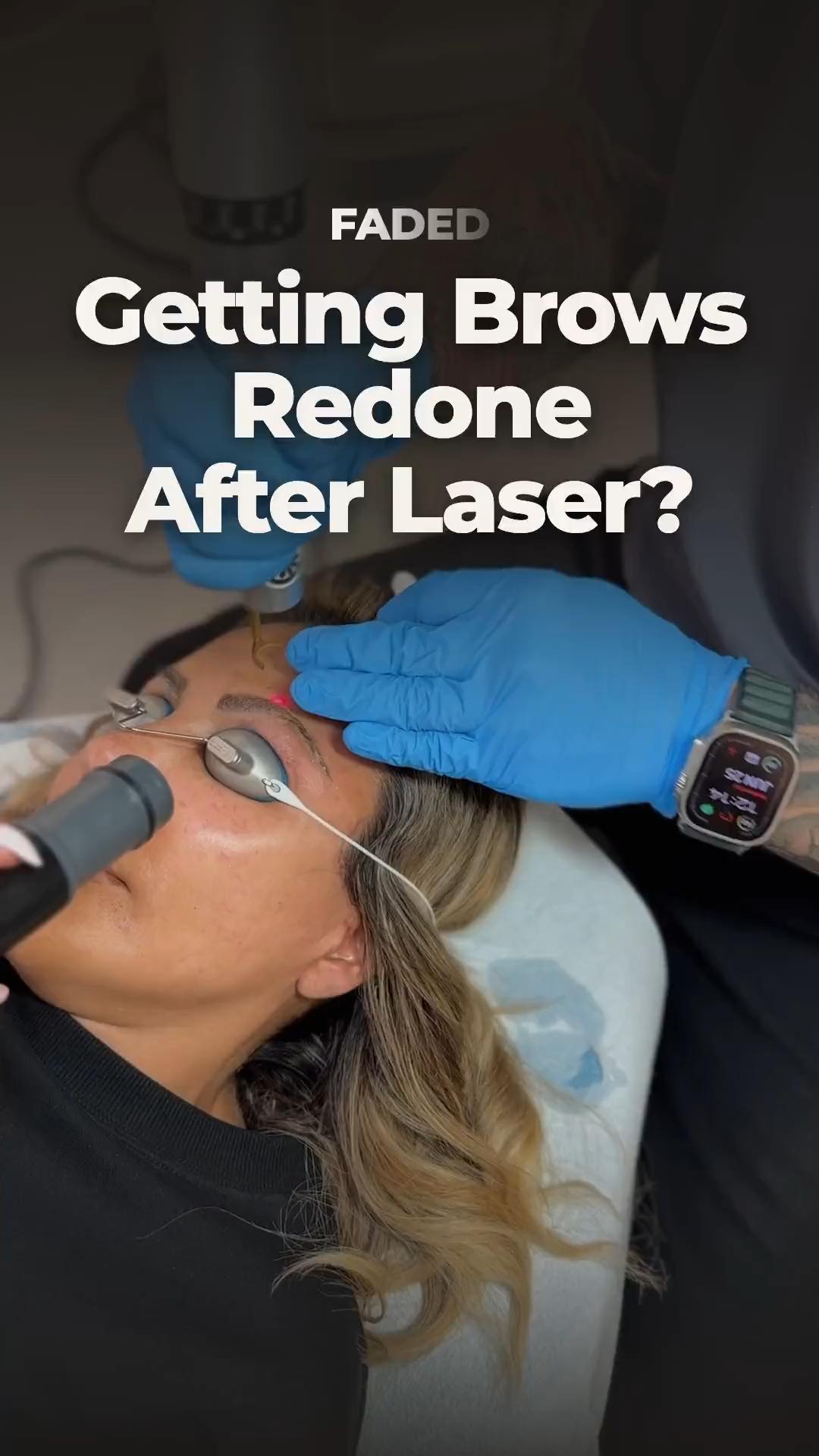
A lot of people who book brow removal at Studio Kiku aren't planning to go without brows forever. They want the old set gone so an artist can start again: a softer colour, a cleaner line, a shape that suits the face they have now. Getting PMU brows redone after laser removal is a common plan, and it works well when the timing and the goal line up.
Two questions decide how that plan plays out. The first is how long the skin needs between the last laser session and the new tattoo. The second is whether the new brows will sit in the same place as the old ones or take a different shape, because that changes how much of the old pigment has to come out first.
New brows are a new tattoo
Microblading, nano brows, powder ombre and combo brows go by different names, but they all place pigment in the skin with a needle. Billy DeCola, the founder of Studio Kiku, puts it plainly: "And when I say redone, I'm talking about getting them re tattooed, whether it's microblading, nano brows, combo, ombre, it's all the same. It's a tattoo."
That framing matters for planning. A new set of brows asks the same thing of the skin that the first set did, and the skin should be in the same condition it was the first time: calm, even and fully settled after the laser.
How long to wait after your last laser session
Studio Kiku recommends waiting at least three months (12 weeks) after the most recent laser session before the new brows go on. Longer is better if your schedule allows it. Everyone's skin settles at its own pace, and three months is the floor rather than the target.
"Two weeks or a week is not enough time. Three months minimum. If you can wait longer, that's great because sometimes it takes longer for your skin to get back to normal," Billy explained on the FADED Podcast.
The reason is what happens to fine work in skin that isn't back to normal. Brows tattooed too soon can look crisp on the day and photograph well, then start to change within weeks. Fine hair strokes can drift and spread, and the edges lose the sharpness they had when the artist finished. The new work pays for the shortcut, and the brows you waited for end up softer and blurrier than you paid for.
The same timing applies in the other direction. If you have just had brows done and already know you dislike them, the studio recommends waiting about three months before the first laser session, so the pigment can settle and the skin can recover from the tattooing.
Same shape or a new one
If the new brows will follow roughly the same outline as the old ones, there is more room to work with. Whatever old pigment remains sits inside the area the new strokes will cover, so a leftover tone is far less likely to show.
A new shape is a different job. When the new brows are thinner, higher, shorter or arched differently, any old pigment outside the new outline stays visible next to them. In that case the old brows have to come out fully, or you end up filling in around the new set with makeup every morning, which defeats the point of permanent makeup.
Complete brow removal at Studio Kiku usually takes 3 to 6 sessions, spaced at least 8 weeks apart. Add the three months after the final session, and someone changing their brow shape should plan on roughly six months to a year before the new set goes on. More detail on how the laser approaches brow pigment is on the PMU removal page.
A yellow undertone can lock in the old shape
Most brow pigment isn't a single colour. Manufacturers mix warm undertones, usually red, yellow or both, into the dark pigment so the brows settle warm rather than grey. The laser lifts the dark first, which reveals whatever was mixed underneath. Red usually clears well on the PicoWay. Yellow is the hard one, and sometimes it won't lift with laser at all.
That has a direct effect on getting brows redone. If a yellow undertone stays put, a new set in a different shape would leave the yellow showing outside the new lines. Billy has described exactly this: "if you try to change the shape, then you're gonna see the yellow poking through, whether it's top or bottom." Brows can still be redone over a stubborn yellow, but realistically only in the same shape as before.
There are options when that happens. Saline removal can be attempted on pigment the laser won't move, though it isn't fully effective and results vary from client to client. White in the pigment is a firmer limit, because laser can't remove it. And if the brows have been treated a few times with no change, the team will tell you to stop rather than keep booking sessions that aren't working.
Bringing your artist into the plan
The smoothest redo usually involves the PMU artist early. Showing them the brow shape you want before removal starts tells everyone how much of the old pigment actually needs to go, and where.
Photos taken between sessions help too. Your artist can see how the brows are lightening, and you can both judge whether the skin looks fully settled before booking the new appointment.
If you are thinking about new brows and want to know how far removal needs to go first, a free consultation is the place to start. The team can look at the pigment, talk through the shape you have in mind, and map out the sessions and the waiting time before your artist takes over. Book a free consultation in Vancouver, Langley or Vaughan.
Thanks for reading.