
Tattoo Lightening
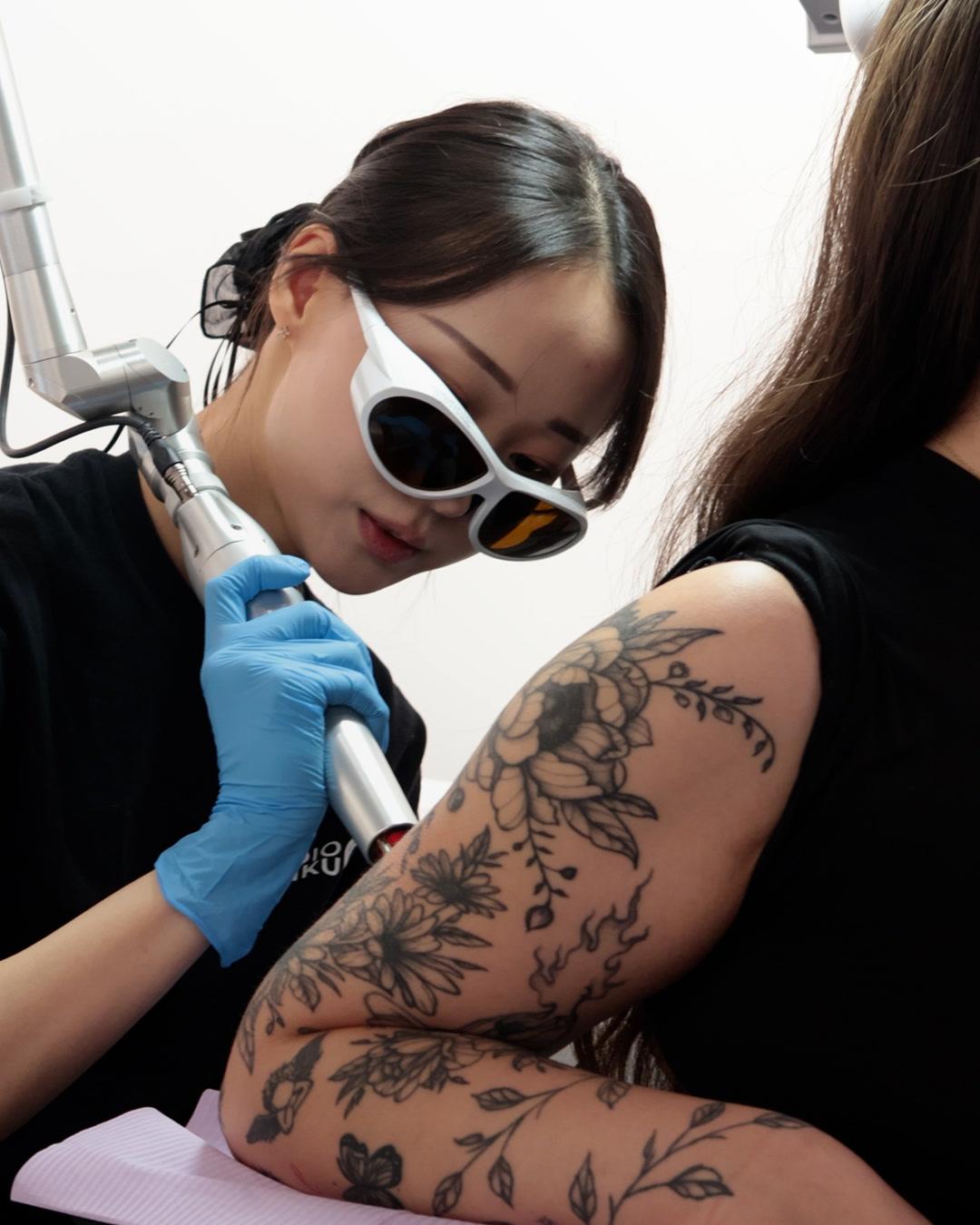
You need enough of the tattoo gone that your artist can put something better over it.
Cost
Tattoo lightening starts at $100 per session. What you pay depends on the size of the tattoo, so we quote it from a photo or at your first appointment rather than off a chart. Sleeves and back pieces are priced per pass.
If you'd rather have a number before you come in, send us photos through the photo quote form and we'll come back with a per-session price and an estimate of how many sessions your piece needs. That's usually enough for you and your artist to plan the whole job in one conversation.
A test spot is $50 and comes off the cost of treatment if you go ahead. GST applies on top of all prices.
Enough Gone for a Clean Canvas
A cover-up fails when the old pigment is still dark enough to show through the new one. Your artist ends up designing around it, leaning on heavy blacks, and hiding shapes instead of drawing them.
Lightening solves that without going all the way to bare skin. We break the old pigment down until the new design has room to sit, and then we stop. That's three to six sessions on average, not the nine to twelve a full removal takes.
Why Lighten
Fewer Sessions
Most pieces need three to six sessions on average to lighten, against the nine to twelve a full removal takes. You get to your cover-up sooner.
Costs Less
You only pay for the sessions it takes to clear the way for the new piece, not for taking the whole tattoo down to bare skin.
A Better Cover-up
Your artist stops working around the old pigment and starts designing freely. Lighter colours become possible, and the old shape stops showing through.
We Work with Your Artist
Bring us the design or a reference and we will lighten to what it needs.
How the Timing Works
Sessions are spaced a minimum of eight weeks apart, because the work happens between them. The laser shatters the pigment and your body clears it over the following weeks, so rushing the gap doesn't speed anything up.
Once we've finished lightening, give the skin about another 12 weeks to settle before your artist tattoos over it. End to end, plan on roughly six months to a year from your first session to sitting in your artist's chair. If you have a date in mind, tell us at your appointment and we'll work backwards from it.
What Fades Quickly and What Holds On
Black and dark grey lift the most readily, along with dark blues, greens and saturated reds. Older work that has already faded tends to move quickly too.
White and light pigment, including light blue and pink, is slower and sometimes never clears completely. Scar tissue from the original tattoo limits how far we can go, and a piece that's already been covered once carries layered pigment that takes more sessions. For a cover-up that's usually still workable, and we'll tell you honestly at your appointment if we don't think it is.
Lightened by Someone Who Tattoos
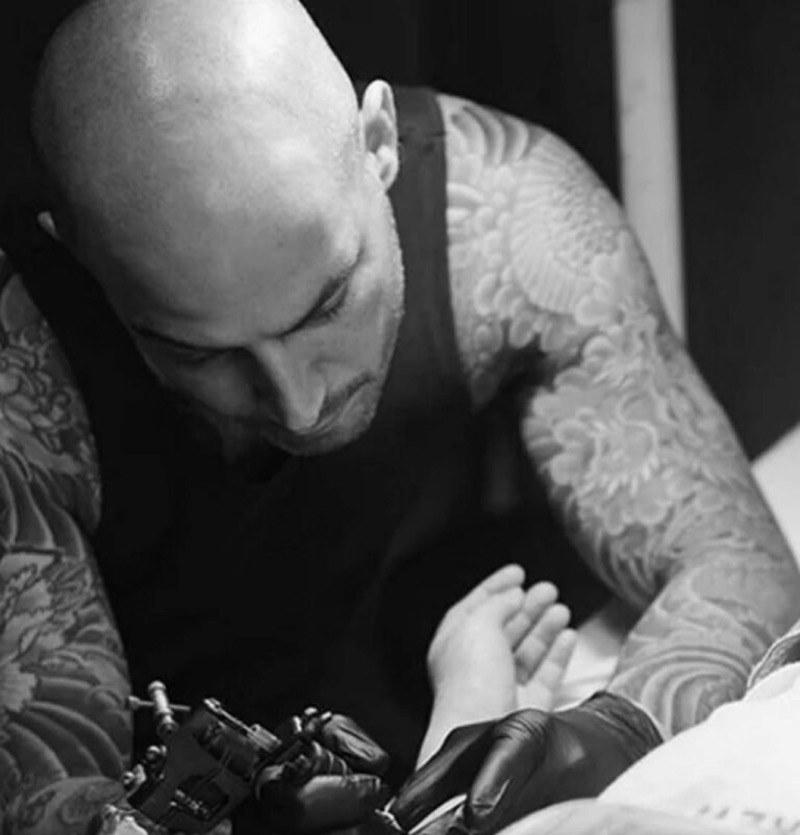
Billy DeCola has tattooed since 2009. He apprenticed with Ami James, spent the first two seasons on NY Ink, and studied traditional Japanese work in Japan. He knows what an artist needs to see on that skin before they can put a needle in it, because he has been on that side of it.
Every session runs on the PicoWay, Candela's true picosecond platform, across its 1064, 730 and 532 wavelengths, so blacks, blues and greens, and the warm end of the spectrum each have a wavelength aimed at them.
Make Room for the New One
Book an appointment. We'll look at the tattoo, talk through your cover-up, and tell you how many sessions it needs.
Book an Appointment4.9 from 350+ Google reviews